Listen to the rhythmic thud of the meat mallet against the cutting board. It is the sound of structural engineering meeting culinary tradition. We are not just making dinner; we are performing a high-stakes mechanical flattening study on a pork loin. The objective is the perfect Breaded Pork Schnitzel. To achieve this, we must transform a dense, fibrous muscle into a wide, uniform canvas of protein. This process is not about brute force. It is about the strategic redistribution of mass to ensure a rapid, synchronized thermal transition. When that thin sheet of pork hits the shimmering fat, the goal is an immediate, explosive Maillard reaction. The crust must puff away from the meat in delicate, golden waves; a phenomenon known as "souffling." If you fail, you are left with a soggy, leaden slab of grease. If you succeed, you create a masterpiece of texture where the crunch of the breading provides a structural contrast to the tender, viscous interior. Let us audit your infrastructure and optimize your output.
THE DATA MATRIX
| Metric | Specification |
|---|---|
| Prep Time | 25 minutes |
| Execution Time | 10 minutes |
| Yield | 4 Servings |
| Complexity (1-10) | 4 |
| Estimated Cost per Serving | $4.50 |
THE GATHERS
Ingredient Protocol:
- 4 Center-cut pork loin chops (approx. 700g / 1.5 lbs)
- 125g / 1 cup All-purpose flour
- 3 Large eggs (approx. 150ml)
- 200g / 2 cups Fine dried breadcrumbs (unseasoned)
- 5g / 1 tsp Fine sea salt
- 2g / 0.5 tsp Freshly cracked black pepper
- 250ml / 1 cup Neutral frying oil (Grapeseed or Sunflower)
- 60g / 4 tbsp Unsalted butter
- 1 Lemon (cut into wedges for a piquant finish)
- 15g / 2 tbsp Fresh parsley (finely minced)
Section A: Ingredient Quality Audit:
The primary failure point in the infrastructure of a Breaded Pork Schnitzel is the moisture content of the breading. If your breadcrumbs are stale or humid, they will fail to aerate during the fry, resulting in a flat, dense shell. Technical fix: Toast your breadcrumbs in a low oven (100C / 212F) for ten minutes to drive off residual moisture before coating.
Secondly, the pork must be at room temperature. Cold protein causes a thermal shock to the cooking fat, dropping the temperature and leading to oil absorption rather than a crisp sear. If your pork is weeping moisture, pat it aggressively dry with lint-free towels. Surface moisture is the enemy of adhesion; it creates a steam barrier that will cause your breading to slough off in the pan like a failing facade.
THE MASTERCLASS
1. Mechanical Thinning and Leveling
Place the pork between two sheets of heavy-duty plastic wrap. Using the flat side of a meat tenderizer or a heavy rolling pin, strike the meat from the center outward. You are looking for a uniform thickness of 5mm (1/4 inch).
Pro Tip: Use a digital scale to ensure each cutlet weighs the same before flattening. This ensures that every piece in the pan reaches the target internal temperature at the exact same millisecond.
2. The Triple-Stage Coating Sequence
Set up three shallow trays. Tray one: Flour seasoned with salt and pepper. Tray two: Eggs beaten until the proteins are fully broken down. Tray three: Breadcrumbs. Dredge the pork in flour, shake off every excess grain, dip in egg, and finally press into the breadcrumbs.
Pro Tip: Use a bench scraper to keep your workstation clean between dredging cycles. This prevents the "club hand" effect where breading builds up on your fingers, ensuring a cleaner application on the meat.
3. Thermal Initiation and Fat Management
Heat the oil in a large, heavy-bottomed skillet until it reaches 175C (350F). Add the butter; the foaming action indicates the water is evaporating. Carefully lay the pork away from you into the fat.
Pro Tip: Use a saucier or a small ladle to continuously spoon the hot fat over the top of the schnitzel as it fries. This "basting" technique is what causes the breading to expand and souffle away from the meat.
4. The Resting and Drainage Phase
Once the schnitzel is deep golden brown (approximately 3 minutes per side), remove it and place it on a wire cooling rack. Do not place it on paper towels, as the trapped steam will immediately soften the bottom crust.
Pro Tip: Immediately hit the hot schnitzel with a final dusting of fine sea salt. The residual heat allows the salt to bond to the fat before it cools and loses its tackiness.
Section B: Prep & Timing Fault-Lines:
Timing is the silent killer of the perfect schnitzel. A common error is breading the meat too far in advance. If the breaded pork sits for more than ten minutes, the flour begins to hydrate and turn into a paste, which prevents the crust from separating and puffing.
Temperature control is equally volatile. If the oil is too hot, the breadcrumbs burn before the pork's connective tissue can render. If it is too cold, the meat boils in oil. Use an infrared thermometer to monitor the "recovery time" of the oil after each batch. If the temperature drops below 160C (320F), stop and wait for the system to recharge.
THE VISUAL SPECTRUM
Section C: Thermal & Visual Troubleshooting:
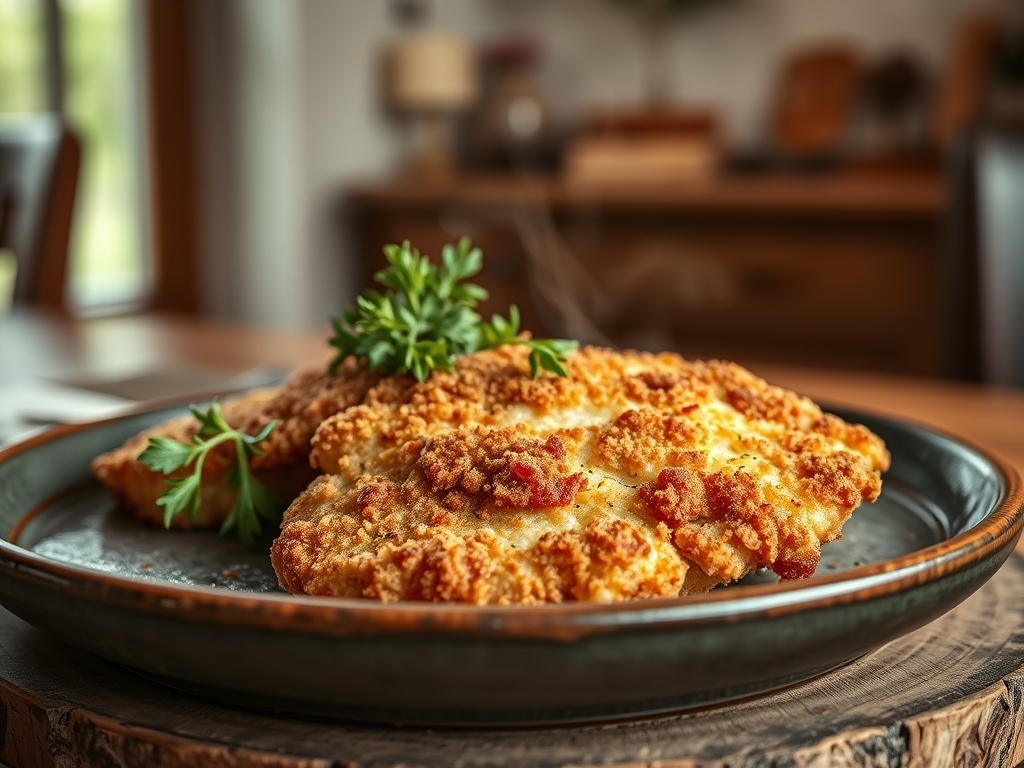
Look at the reference image above. Notice the "topography" of the crust. It is not a flat, painted-on surface; it is a landscape of peaks and valleys. If your schnitzel looks like a flat cracker, you didn't use enough fat or failed to baste. The oil should come halfway up the side of the meat.
If you see dark brown spots and pale patches, your pan was not level, or you crowded the infrastructure. Each cutlet needs "breathing room" to allow the oil to circulate. The color should be a uniform "old gold." If it looks dull or grey, your oil was likely old or contaminated with burnt flour from a previous batch. Always filter your oil through a fine-mesh sieve if performing multiple runs.
THE DEEP DIVE
Macro Nutrition Profile:
A standard 175g serving of Breaded Pork Schnitzel provides approximately 450 calories. This includes 35g of protein, 22g of carbohydrates, and 26g of fats. The high fat content is a result of the breading's high surface area, which acts as a sponge for the cooking medium.
Dietary Swaps:
- Vegan: Substitute the pork with a large, flattened "steak" of king oyster mushroom or seitan. Use aquafaba (chickpea liquid) as the binding agent instead of eggs.
- Keto/GF: Replace the flour with almond flour and use crushed pork rinds or parmesan cheese in place of breadcrumbs. These alternatives infuse the dish with additional fats but maintain the structural integrity.
Meal Prep & Reheating Science:
To maintain the molecular structure when reheating, avoid the microwave at all costs. The microwave excites water molecules, turning the breading into a soggy sponge. Instead, use an air fryer or a wire rack in a 200C (400F) oven for five minutes. This flash-heating re-crisps the exterior fats without overcooking the lean interior.
THE KITCHEN TABLE
Why does my breading fall off in the pan?
Usually, this is caused by surface moisture on the pork. If the meat isn't dried before flouring, a layer of steam forms during frying, physically pushing the crust away from the protein. Always pat the meat dry with intensity.
Can I use panko instead of traditional breadcrumbs?
Yes, though it is less traditional for a Viennese-style schnitzel. Panko provides a more jagged, airy crunch. Ensure you pulse the panko slightly in a processor to reduce the grain size for better coverage on the thin meat.
What is the best oil for frying schnitzel?
High smoke-point oils are mandatory. Grapeseed, avocado, or refined sunflower oil are ideal. Avoid extra virgin olive oil, as its low smoke point will cause it to break down and impart a bitter, burnt flavor to the crust.
How do I get that wavy, puffed-up crust?
The secret is "shaking the pan." Gently swirl the skillet while the schnitzel fries so that hot oil washes over the top surface. This creates steam pockets within the egg layer, forcing the breading to expand and ripple.
Do I need to deglaze the pan afterward?
While not traditional for the schnitzel itself, you can deglaze the brown bits (fond) with a splash of white wine and lemon juice to create a rapid pan sauce. However, never pour the sauce over the schnitzel; serve it on the side.