Forget everything you think you know about frying. Most home cooks approach a deep fryer like a demolition derby; they throw protein into hot oil and pray for survival. But we are here for a Tempura Batter Audit. This is not just cooking; it is a high-stakes negotiation between moisture and fat. We are looking for the "Cold Shock" phenomenon. This occurs when a sub-zero, carbonated liquid hits 375 degree oil, creating a violent evaporation event that leaves behind a delicate, lacy architecture. If your batter looks like a heavy corn dog coating, you have failed the audit. We want a coating so light it feels like crystallized air. We are hunting for that specific, shattered-glass crunch that signals a successful thermal exchange. To achieve this, we must manipulate starch molecules and suppress gluten development with the precision of a laboratory technician. Strap in, check your thermometer calibration, and prepare to audit your technique from the molecular level up. We are building vapor barriers, not blankets.
THE DATA MATRIX
| Metric | Specification |
|---|---|
| Prep Time | 10 Minutes |
| Execution Time | 15 Minutes |
| Yield | 4 Servings |
| Complexity (1-10) | 7 |
| Estimated Cost per Serving | $2.50 |
THE GATHERS
Ingredient Protocol:
- 125g / 1 cup All-Purpose Flour (Low protein preferred)
- 50g / 0.5 cup Cornstarch or Potato Starch
- 250ml / 1 cup Sparkling Mineral Water (Ice cold)
- 1 Large Egg Yolk (Cold)
- 5g / 1 tsp Baking Soda
- 10g / 2 tsp Sea Salt
- 1 Liter / 4 cups Neutral Oil (Grapeseed or Rice Bran)
Section A: Ingredient Quality Audit:
The primary failure point in most audits is the flour protein content. High protein equals high gluten; high gluten equals a rubbery, bread-like shell. If you only have high-protein bread flour, you must cut it with 30 percent cornstarch to dilute the gluten potential. Another common audit failure is the liquid component. If your sparkling water is room temperature, your batter will be viscous and heavy. It must be borderline slushy. The carbonation provides the initial aerate phase, creating micro-bubbles that expand instantly in the heat. Finally, check your oil. If you are using old oil with a high concentration of polar compounds, your tempura will turn brown too quickly and taste "fishy." Use fresh, high-smoke-point oil to ensure a clean, golden finish.
THE MASTERCLASS
1. The Thermal Stabilization
Place your mixing bowl inside a larger bowl filled with ice and water. Use a digital scale to measure your dry ingredients directly into the chilled bowl. Whisk the flour, starch, and baking soda together to ensure even distribution of the leavening agent.
Pro Tip: Keeping the bowl chilled prevents the starch from hydrating too quickly. This delay in hydration ensures that the batter remains thin and runny, which is essential for that signature lacy texture.
2. The Liquid Integration
In a separate saucier or small pitcher, whisk the egg yolk into the ice-cold sparkling water. Pour the liquid into the dry ingredients all at once. Use a pair of long chopsticks to stir the mixture for no more than 10 to 15 seconds.
Pro Tip: Do not overmix. You want visible lumps of flour. Over-mixing activates gluten, which turns your crisp barrier into a chewy dough. The chopsticks minimize surface area contact compared to a whisk.
3. The Surface Tension Adjustment
Check the consistency. It should look like heavy cream but feel much lighter. If it is too thick, add a tablespoon of ice water. Use a bench scraper to keep your workstation clean of any flour dust that might accidentally fall into the wet mix.
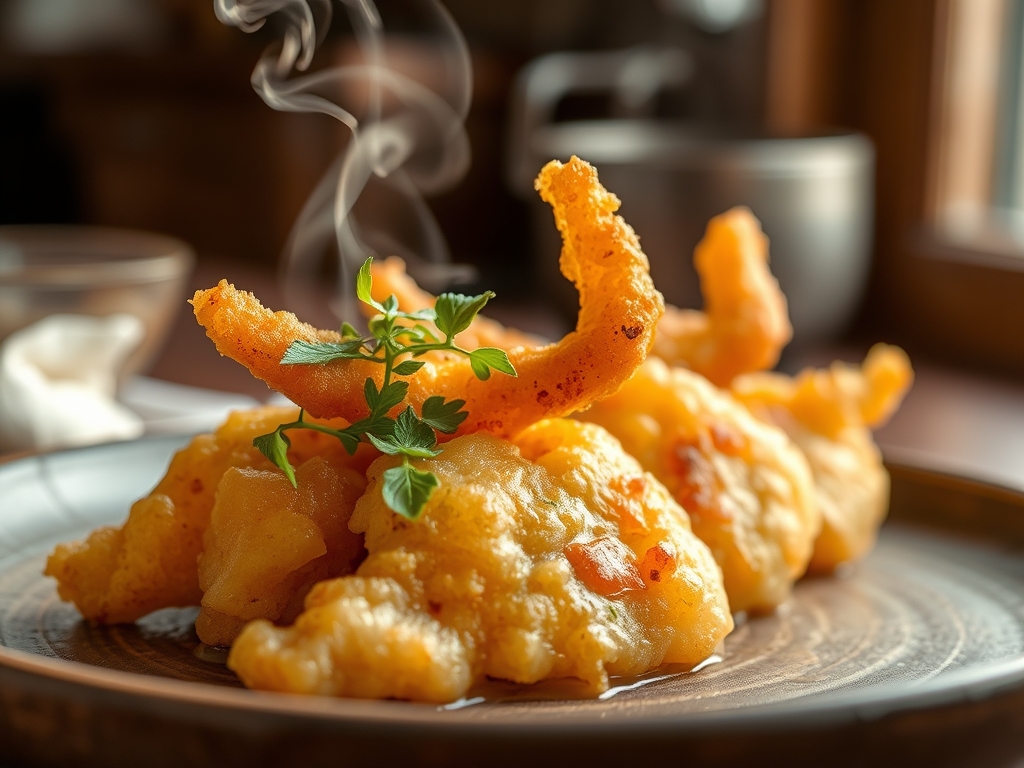
Pro Tip: A thin batter allows the steam from the vegetable or shrimp to escape rapidly. This steam creates the "lacy" protrusions seen in the Masterclass photo, as the batter is pushed outward before it sets.
4. The Flash Evaporation
Dip your chilled, dry ingredients into the batter and immediately drop them into the oil. Do not crowd the pot. Use a digital scale to monitor the weight of your batches if you are doing high-volume production.
Pro Tip: The "Cold Shock" relies on the temperature delta. The greater the difference between the batter and the oil, the more violent the steam release. This creates a porous structure that stays crisp longer.
Section B: Prep & Timing Fault-Lines:
The most dangerous fault-line in this audit is the "Wait Time." If your batter sits for more than 20 minutes, the carbonation dissipates and the starch granules fully hydrate. This results in a flat, greasy coating. You must mix the batter only when the oil has reached 375 degrees Fahrenheit. Another timing error is the "Drip Gap." The time between dipping the food and hitting the oil should be less than two seconds. If the batter drips off too much, the protection is lost; if it sits too long, the moisture from the food seeps into the batter, ruining the crunch.
THE VISUAL SPECTRUM
Section C: Thermal & Visual Troubleshooting:
Referencing the Masterclass photo above, look for the "Fractal Edges." If your tempura looks smooth like a chicken nugget, your oil was too cold or your batter was too thick. You want those jagged, irregular spikes. If the color is dark brown, your oil is either dirty or too hot, causing the sugars to render and burn before the interior is cooked. If the coating is pale and falling off, you likely didn't dredge the food in a light dusting of dry starch before dipping. The dry starch acts as a "glue" between the moist ingredient and the wet batter. Finally, if you see "Oil Puddles" on the plate, your oil temperature dropped during the fry, causing the batter to absorb fat rather than repel it.
THE DEEP DIVE
Macro Nutrition Profile:
Tempura is deceptively light but calorie-dense due to the oil. A standard serving contains approximately 350 calories, 22g of fat, 30g of carbohydrates, and 8g of protein. The goal of a perfect audit is to minimize oil retention, which keeps the fat content on the lower end of the spectrum.
Dietary Swaps:
- Vegan: Omit the egg yolk. Increase the sparkling water by 20ml and add a pinch of turmeric for color.
- Gluten-Free: Replace all-purpose flour with a 50/50 mix of white rice flour and cornstarch. This actually creates an even crispier barrier.
- Keto: This is difficult, but a mixture of unflavored whey protein isolate and crushed pork rinds can mimic the texture, though it will lack the "lacy" visual.
Meal Prep & Reheating Science:
Tempura does not "prep" well in the traditional sense. However, if you must reheat, do not use a microwave. The microwave agitates water molecules, which will soften the starch structure. Use an air fryer or a convection oven at 400 degrees for 3 minutes to infuse the shell with dry heat and re-crisp the exterior.
THE KITCHEN TABLE
Why is my tempura batter soggy?
Sogginess is caused by gluten development or low oil temperature. If you over-mix the batter or let it sit too long, the structure becomes dense. Ensure your oil stays at 375 degrees to flash-fry the exterior.
Can I use regular water instead of sparkling?
You can, but you will lose the aeration. The CO2 bubbles in sparkling water expand rapidly in the heat, creating the signature light and airy texture that still water cannot replicate.
What is the best oil for tempura?
Use an oil with a high smoke point and neutral flavor. Rice bran oil is the gold standard in Japan, but grapeseed or canola oil works perfectly for maintaining a clean taste.
Why do I need to use an ice bath?
The ice bath keeps the batter temperature low, which slows down gluten formation. It also maximizes the "Cold Shock" effect when the batter hits the hot oil, ensuring a crispier result.