Listen to the sound of a structural failure that is actually a culinary triumph. It is the sharp, percussive crack of a perfect Fish and Chips Crust yielding to a serrated knife. This is not just dinner; it is an engineering marvel designed to withstand the violent thermal energy of a deep fryer. Most home cooks produce a soggy, oil-logged shroud that clings to the protein like a wet blanket. We are here to audit that failure out of existence. We are building a vapor-locked shield. The goal is a batter that undergoes rapid dehydration on the surface while simultaneously creating an internal steam chamber. This pressurized environment flash-cooks the cod in its own juices, preserving the delicate flake while the exterior transforms into a golden, honeycomb lattice of starch and protein. We are leveraging carbonation, cold-chain management, and high-heat physics to ensure every bite delivers that signature crunch. If your crust does not shatter like glass, your infrastructure has failed. Let us rebuild it from the flour up.
THE DATA MATRIX
| Metric | Specification |
|---|---|
| Prep Time | 20 Minutes |
| Execution Time | 15 Minutes |
| Yield | 4 Servings |
| Complexity | 6 / 10 |
| Estimated Cost per Serving | $4.50 – $6.00 |
THE GATHERS
Ingredient Protocol:
- 700g / 1.5 lbs Fresh Atlantic Cod (thick-cut loins)
- 250g / 2 cups All-purpose flour (divided for dredging)
- 50g / 0.5 cup Cornstarch (for crystalline structure)
- 10g / 2 tsp Baking powder (chemical aeration)
- 330ml / 12 oz Ice-cold Lager or Pilsner (CO2 source)
- 15ml / 1 tbsp Vodka (inhibits gluten development)
- 5g / 1 tsp Fine sea salt
- 2L / 2.1 qt High-smoke point oil (Beef tallow or Peanut oil)
Section A: Ingredient Quality Audit:
The most common failure point is the moisture content of the fish itself. If you are using frozen cod that has been improperly thawed, the cellular walls have likely collapsed; this releases excess water that will steam the batter from the inside out and cause it to slide off. Fix: Salt the raw fillets 15 minutes before cooking to draw out surface moisture, then pat dry with industrial-grade paper towels. If your flour is too high in protein (like bread flour), your crust will be chewy rather than crisp. Stick to all-purpose or a mix of rice flour to ensure a delicate, aerated snap. Finally, if your beer is room temperature, the CO2 will escape too quickly. Keep the liquid at 1 degree Celsius until the moment of mixing.
THE MASTERCLASS
Step-by-Step Execution:
1. Thermal Stabilization and Protein Prep
Slice the cod into uniform 150g portions. Use a digital scale to ensure consistency; uneven sizes lead to uneven thermal gradients. Season the fish and let it rest on a wire rack. This allows the salt to penetrate the muscle fibers and infuse the protein with flavor while the surface dries.
Pro Tip: Use a bench scraper to move the delicate fillets without tearing the flesh. A dry surface is the only way to ensure the flour dredge creates a permanent bond between the fish and the batter.
2. The Dry Phase Aeration
In a large stainless steel bowl, whisk together the flour, cornstarch, and baking powder. Sifting these ingredients is non-negotiable. You want to aerate the mixture to prevent clumps that create dense, doughy pockets in the finished Fish and Chips Crust.
Pro Tip: High-quality saucier whisks are better for this than balloon whisks because they reach the "corners" of the bowl, ensuring no unmixed starch remains at the base.
3. The Cold-Chain Batter Synthesis
Create a well in the center of your dry ingredients. Pour in the ice-cold beer and the vodka. Whisk gently and briefly. Do not overmix. A few small lumps are acceptable; overworking the batter develops gluten, which results in a bread-like texture rather than a crisp shell.
Pro Tip: The alcohol in the vodka evaporates faster than water. This accelerates the dehydration of the crust in the fryer, creating a more viscous and ultimately crispier interface.
4. The Dredge and Dip Protocol
Dredge each fillet in a separate tray of seasoned flour, shaking off every gram of excess. Dip the floured fish into the cold batter, ensuring total coverage. Lift the fish and let the excess batter stream off for exactly three seconds before transferring to the oil.
Pro Tip: Use a spider skimmer to gently lower the fish into the oil. Always drop the fish away from your body to prevent thermal splashback.
5. The High-Heat Immersion
Heat your oil to 180C (350F) in a heavy-bottomed pot. Maintain this temperature. When the fish enters the oil, the batter should immediately expand as the CO2 gas bubbles react to the heat. Fry for 4 to 6 minutes until the crust is a deep, architectural gold.
Pro Tip: Use an infrared thermometer or a probe to monitor oil recovery time. If the temperature drops below 170C, the batter will absorb oil and become viscous in the wrong way; greasy and heavy.
Section B: Prep & Timing Fault-Lines:
Timing is the silent killer of the Fish and Chips Crust. If you batter the fish and let it sit on the counter, the baking powder will exhaust its leavening power before it hits the oil. This results in a flat, hard shell. The "Dredge-Dip-Drop" sequence must be a continuous motion. Furthermore, if the oil is not hot enough, the batter will not "set" instantly. It will instead leak into the oil, creating "bits" and leaving the fish exposed. Always wait for the oil to return to its target temperature between batches.
THE VISUAL SPECTRUM
Section C: Thermal & Visual Troubleshooting:
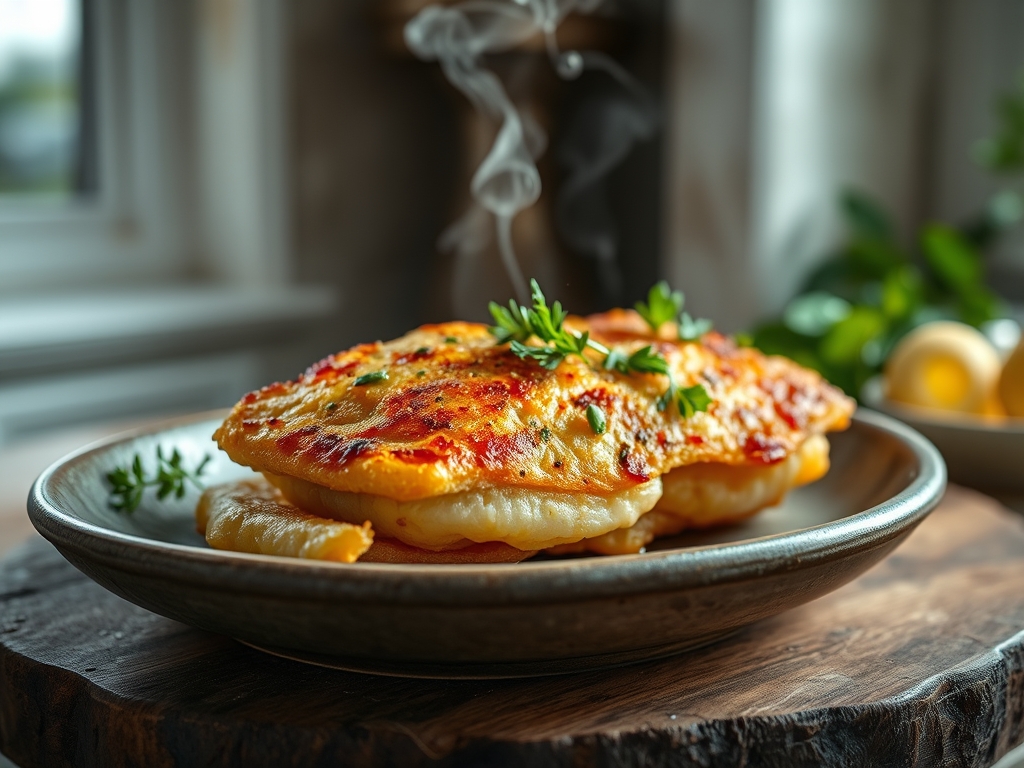
Look at the Masterclass photo above. Notice the "peaks" and "valleys" on the surface of the crust. This is the result of proper carbonation. If your crust looks smooth like a pancake, you likely overmixed the batter or used flat beer. If the color is pale and ghostly, your oil temperature was too low or your batter lacked the necessary sugars for the Maillard reaction. Conversely, if the crust is dark brown but the fish is raw inside, your oil was too hot. The ideal visual cue is a "shattered lace" appearance; a golden-hued, topographical map of crunch that holds its shape even when pierced by a fork.
THE DEEP DIVE
Macro Nutrition Profile:
A standard serving (150g fish + batter) contains approximately 450 calories. You are looking at 28g of protein, 22g of fats (depending on oil absorption), and 35g of carbohydrates. The use of beef tallow increases saturated fat but provides a superior flavor profile and higher smoke point.
Dietary Swaps:
- Gluten-Free: Replace all-purpose flour with a 50/50 mix of rice flour and cornstarch. Use a gluten-free cold sparkling water or GF beer.
- Keto: This is difficult, but a coating of crushed pork rinds and parmesan cheese can mimic the crunch, though it lacks the "vapor-lock" steam chamber of a traditional batter.
- Vegan: Use firm tofu or "banana blossom" as the protein substitute. The batter protocol remains identical using plant-based beer.
Meal Prep & Reheating Science:
Fried fish is a "live" dish; its molecular structure begins to degrade the moment it leaves the oil. To reheat, never use a microwave, which vibrates water molecules and turns the crust into mush. Use an air fryer or oven at 200C (400F) for 4 minutes to re-dehydrate the exterior starch.
THE KITCHEN TABLE
Why is my batter falling off the fish?
The fish surface was too wet. Ensure the cod is bone-dry and thoroughly dredged in flour before dipping. The flour acts as the "glue" that binds the wet batter to the protein.
Can I use water instead of beer?
Yes, but use highly carbonated sparkling water. The CO2 is essential for creating the tiny air pockets that make the crust light. Beer adds sugar and protein which aids in browning.
What is the best oil for frying?
Beef tallow is the gold standard for flavor and crispness. For a neutral profile, use peanut or canola oil. Avoid olive oil as its smoke point is too low for this application.
How do I keep the fish warm while cooking batches?
Place a wire cooling rack over a baking sheet in a 100C (210F) oven. The airflow around the rack prevents the bottom of the Fish and Chips Crust from steaming and becoming soggy.