Welcome to the theater of high-velocity protein transformation. We are not merely making an appetizer; we are engineering a structural masterpiece of crunch and oceanic tenderness. The squid, a cephalopod of remarkable resilience, requires a precise thermal intervention to prevent it from reverting to its natural state of industrial-grade rubber. This is where the Fried Calamari Coating enters the equation as the primary defensive barrier. It is a sacrificial layer of starch and seasoning designed to take the brunt of the 375 degree Fahrenheit oil bath, shielding the delicate mantle while undergoing a rapid Maillard reaction. Imagine the sound of a thousand microscopic glass shards shattering simultaneously. That is the auditory benchmark of success. We are looking for a golden, aerated crust that clings to the ring like a bespoke suit, refusing to slough off at the first hint of a lemon squeeze. Prepare your stations. We are moving from raw, viscous biomass to a state of crispy, golden perfection in under sixty seconds of immersion time.
THE DATA MATRIX
| Metric | Specification |
|---|---|
| Prep Time | 20 Minutes |
| Execution Time | 3 Minutes |
| Yield | 4 Servings |
| Complexity | 6 / 10 |
| Estimated Cost per Serving | $4.50 USD |
THE GATHERS
Ingredient Protocol:
- 500g / 1.1 lbs Fresh Squid (cleaned, tubes cut into 1.5cm rings).
- 250g / 2 cups All-Purpose Flour.
- 60g / 0.5 cup Cornstarch (for crystalline structure).
- 10g / 2 tsp Smoked Paprika.
- 5g / 1 tsp Cayenne Pepper (for a piquant finish).
- 15g / 1 tbsp Fine Sea Salt.
- 500ml / 2 cups Whole Buttermilk (the acidic marinade).
- 2 Liters / 2.1 Quarts Neutral High-Smoke Point Oil (Grapeseed or Peanut).
- 2 Large Lemons (cut into wedges).
- 30g / 0.25 cup Fresh Parsley (finely minced).
Section A: Ingredient Quality Audit:
If your squid arrives smelling like a pier at low tide, abort the mission. Freshness is binary; there is no middle ground. If the mantle is slimy rather than slick, or if the flesh is opaque gray instead of translucent white, the proteins have already begun to degrade. For the flour, ensure it is stored in a cool, dry environment. If your flour is clumpy, it has absorbed ambient moisture, which will lead to a heavy, doughy Fried Calamari Coating rather than a light, shattering one. To fix "tired" flour, sift it twice through a fine-mesh strainer to aerate the particles. If your buttermilk lacks that signature viscous tang, whisk in a teaspoon of white vinegar to boost the acidity, ensuring the lactic acid can properly tenderize the squid fibers.
THE MASTERCLASS
1. The Acidic Pre-Soak
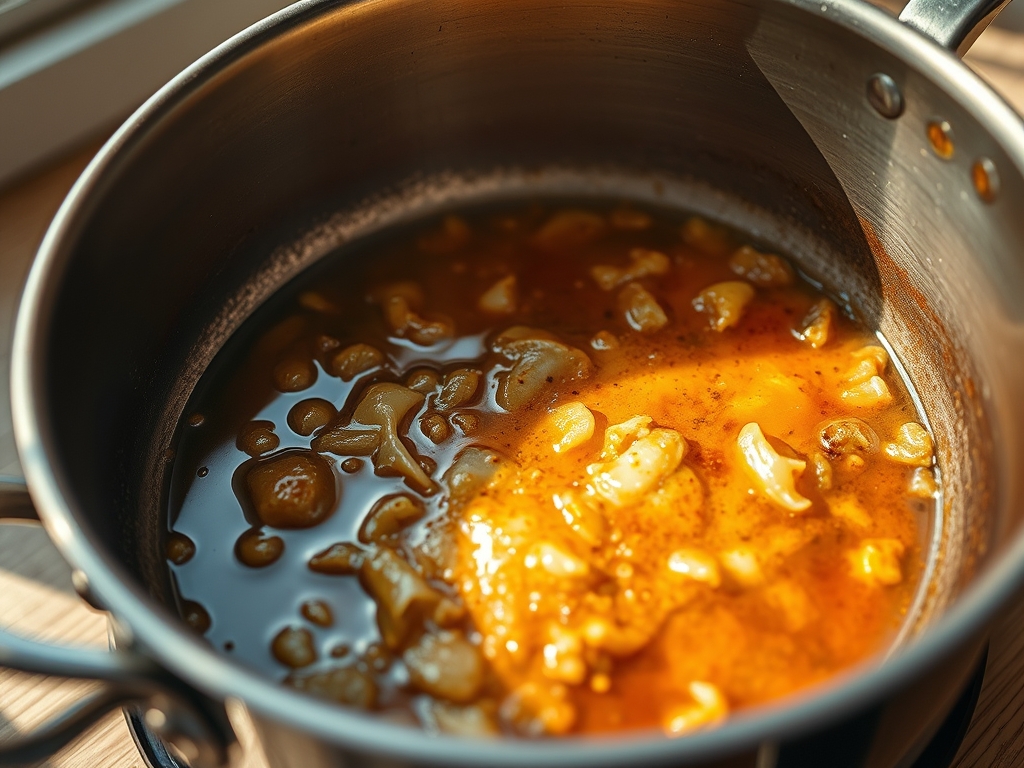
Submerge the cleaned squid rings in a stainless steel bowl filled with the buttermilk. Allow them to marinate for at least 20 minutes. This is not just for flavor; the lactic acid works to break down the tough connective tissues of the cephalopod.
Pro Tip: Use a digital scale to ensure your ratio of squid to liquid is correct. Excess liquid will dilute the subsequent dredge, while too little will result in uneven tenderization. The goal is a thin, even coat of buttermilk that acts as a biological adhesive.
2. The Dry Phase Aeration
In a large shallow tray, whisk together the flour, cornstarch, paprika, cayenne, and salt. You are creating a dry-well system. The cornstarch is vital here because it lacks the gluten-forming proteins of flour, which ensures the crust remains brittle rather than chewy.
Pro Tip: Use a bench scraper to move the flour mixture around, ensuring no pockets of unseasoned starch remain. This tool is also excellent for clearing your workstation of stray flour "dust storms" later in the process.
3. The Dredge and Shake
Lift the squid from the buttermilk, allowing the excess to drip off, and drop them into the flour mixture. Toss vigorously. The rings must be completely isolated from one another to ensure total surface area coverage.
Pro Tip: Place the coated rings into a fine-mesh spider or sieve and shake them over the tray. This removes excess flour that would otherwise burn in the oil, polluting your frying medium and creating a bitter aftertaste.
4. The Thermal Shock
Heat your oil in a heavy-bottomed saucier or deep fryer to exactly 375 degrees Fahrenheit. Drop the rings in small batches. The temperature will plummet immediately; you must manage the heat to keep it above 350 degrees.
Pro Tip: Use an infrared thermometer or a probe to monitor the oil. If the temperature is too low, the coating will absorb oil and become greasy. If it is too high, the exterior will char before the interior proteins have a chance to denature.
5. The Final Render and Garnish
Once the coating is a pale, golden tan (usually 90 to 120 seconds), remove the rings and place them on a wire cooling rack. Do not use paper towels, as the steam trapped underneath will soften the crust you just worked so hard to build.
Pro Tip: Season with a final pinch of salt immediately upon removal while the surface oil is still viscous. This allows the salt to adhere to the crust rather than bouncing off.
Section B: Prep & Timing Fault-Lines:
The most common failure in this workflow is "The Crowd." Overloading the fryer causes the oil temperature to crash, leading to a soggy, oil-logged mess. If your timing is off and the squid sits in the flour too long before frying, the moisture from the buttermilk will hydrate the flour into a paste. This results in a "leathery" shell. To fix this, only dredge what you can fry immediately. If you find your oil is darkening too quickly, you are likely not shaking off enough excess flour, which is carbonizing at the bottom of the pot.
THE VISUAL SPECTRUM
Section C: Thermal & Visual Troubleshooting:
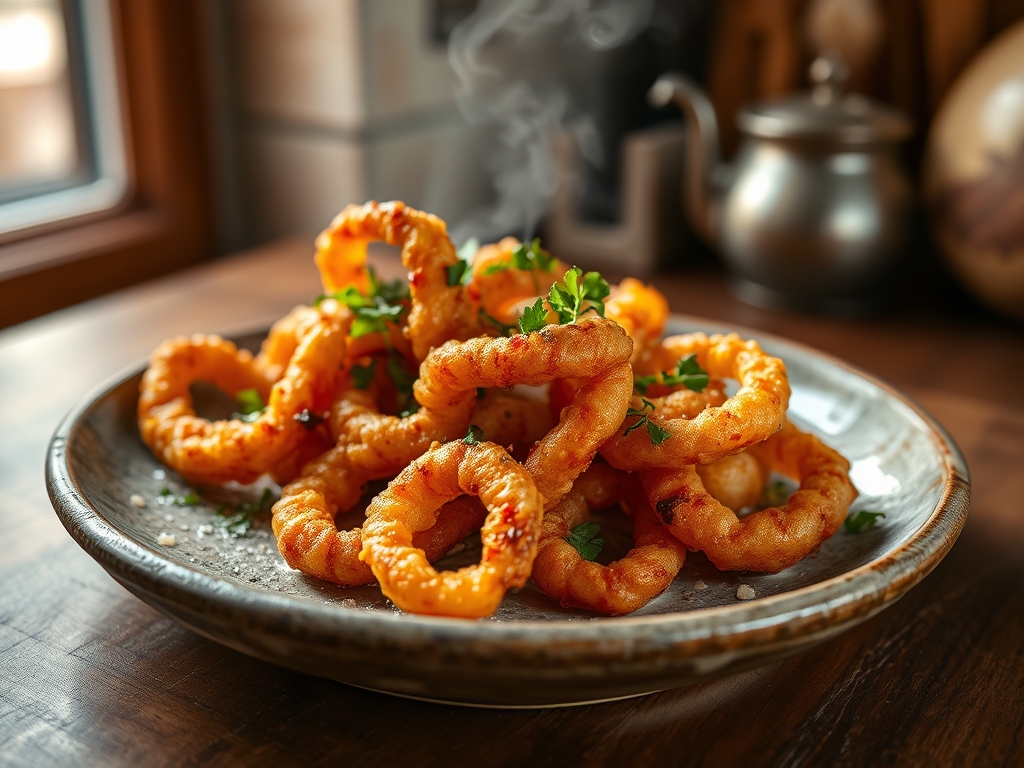
Referencing the Masterclass photo, you should observe a "craggy" topography. This is achieved when tiny droplets of buttermilk mix with the flour to create "nuggets" of extra crunch. If your calamari looks smooth like a corn dog, you have over-shaken the dredge. If the color is dull gray rather than golden, your oil was too cold. If the rings are curling into tight "O" shapes, they were overcooked; the protein fibers have contracted too much. The ideal visual is a light amber hue with visible flecks of red paprika and green parsley, suggesting a balance of heat and freshness.
THE DEEP DIVE
Macro Nutrition Profile
A standard serving (approx. 150g) contains roughly 380 calories, 18g of fat, 25g of carbohydrates, and 28g of protein. While the frying process adds lipid content, the squid itself is a lean, high-protein source rich in Vitamin B12 and Selenium.
Dietary Swaps
- Vegan: Replace squid with sliced King Oyster mushroom stems and use soy milk with lemon juice as the "buttermilk" binder.
- Keto: Swap the flour and cornstarch for a 50/50 mix of almond flour and crushed pork rinds (chicharrones).
- GF: Use a high-quality 1-to-1 gluten-free flour blend and substitute the cornstarch with arrowroot powder for superior snap.
Meal Prep & Reheating Science
Fried calamari is notorious for losing its structural integrity when cooled. To reheat, avoid the microwave, which excites water molecules and turns the crust into a sponge. Instead, use an air fryer or oven at 400 degrees Fahrenheit for 3 minutes. This re-activates the fats in the coating, effectively "re-frying" the exterior and restoring the crystalline crunch.
THE KITCHEN TABLE
Why is my calamari rubbery?
Usually, this is a result of overcooking. Squid follows a "flash or slow" rule. It is tender after 90 seconds of frying or after 40 minutes of braising. Anything in between results in a texture similar to a pencil eraser.
Can I use frozen squid?
Yes, provided it is fully thawed and patted extremely dry. Excess moisture on the surface of frozen squid will steam the Fried Calamari Coating from the inside out, causing it to fall off in the fryer.
What oil is best for frying?
Peanut oil is the gold standard due to its high smoke point and neutral profile. If allergies are a concern, grapeseed or canola oil are excellent secondary options that allow the flavor of the seafood to shine.
How do I get the coating to stick?
The buttermilk soak is the secret. It creates a protein-rich "glue." Ensure you do not skip the "shake" step; too much flour prevents the coating from bonding to the mantle, causing it to puff away and separate.