Listen up, infrastructure specialists. We are not just talking about street food; we are discussing the structural integrity of a high-performance maize-based exoskeleton. If your batter is sliding off the protein like a failed architectural project, you have a data deficit. The perfect golden sheath requires a specific molecular alignment of starches and proteins to survive the thermal shock of the deep fryer. We are here to analyze the Corn Dog Crust Data to ensure your output achieves peak crunch and maximum adhesion. Forget those soggy, oil-logged disappointments found at county fairs of the past. We are looking for a uniform, micro-aerated crumb that shatters upon impact. To reach this level of culinary engineering, you must treat your batter as a precision suspension. We are measuring viscosity, monitoring sugar caramelization, and auditing the thermal delta between the cold batter and the scorching oil. It is time to stop guessing and start calculating. Let us dive into the metrics that separate the amateurs from the masters of the skewer.
THE DATA MATRIX
| Metric | Specification |
|---|---|
| Prep Time | 15 Minutes |
| Execution Time | 10 Minutes |
| Yield | 8 Units |
| Complexity (1-10) | 4 |
| Estimated Cost per Serving | $0.85 |
THE GATHERS
Ingredient Protocol:
- 150g / 1.25 cups Yellow Cornmeal (Fine Ground)
- 125g / 1 cup All-Purpose Flour
- 50g / 0.25 cup Granulated Sugar
- 10g / 2 tsp Baking Powder
- 2g / 0.5 tsp Fine Sea Salt
- 240ml / 1 cup Whole Milk
- 1 Large Egg (Room Temperature)
- 15ml / 1 tbsp Neutral Oil (plus 2L for frying)
- 8 High-Quality Frankfurters
- 60g / 0.5 cup Cornstarch (for dredging)
Section A: Ingredient Quality Audit:
If your cornmeal is too coarse, the crust will suffer from structural instability and a gritty mouthfeel. Technical fix: Pulse coarse meal in a high-speed blender to aerate and refine the particle size. If the batter is too thin, it will not cling to the protein. This usually indicates a lack of protein structure in the flour. Ensure you are using fresh baking powder; if it is expired, the batter will fail to expand, resulting in a dense, leaden coating rather than a light, crisp shell. If your milk is too cold, it may cause the fat in the batter to seize. Temper your liquids to room temperature to ensure a seamless emulsification.
THE MASTERCLASS
1. Dry Component Integration
Begin by whisking your cornmeal, flour, sugar, baking powder, and salt in a large stainless steel bowl. You must ensure a perfectly homogenous mixture to avoid "hot spots" of leavening.
Pro Tip: Use a digital scale for these measurements. Volume can vary by 20% depending on how tightly you pack the measuring cup, but mass never lies. Precision here prevents a crumbly finished product.
2. Liquid Phase Emulsification
In a separate saucier or glass beaker, whisk the milk, egg, and oil until the mixture is fully integrated. Slowly pour the wet ingredients into the dry well while whisking constantly from the center outward.
Pro Tip: Do not overwork the batter. You want to hydrate the starches without over-developing the gluten. Over-mixing leads to a tough, rubbery texture instead of a delicate, viscous coating.
3. The Vertical Immersion Vessel
Transfer your batter into a tall, narrow glass or cylinder. This is a critical infrastructure move. A shallow bowl will not allow for a single-motion, uniform dip.
Pro Tip: Use a bench scraper to clean the sides of your mixing bowl, ensuring every gram of batter makes it into the dipping vessel. Total volume is key for full coverage.
4. Protein Preparation and Dredging
Pat your frankfurters bone-dry with paper towels. Any surface moisture will create a steam barrier that causes the crust to delaminate. Roll each protein in a light coating of cornstarch.
Pro Tip: The cornstarch acts as a primer. Without it, the batter has nothing to grip. This is the secret to preventing the "sock effect" where the crust slides right off the stick.
5. Thermal Execution
Heat your frying oil to exactly 190C (375F). Dip the skewered protein into the batter, twirling as you lift to remove excess, then immediately submerge in the oil.
Pro Tip: Use an infrared thermometer or a probe to monitor oil temperature. If the temp drops below 175C, the batter will absorb oil rather than searing, ruining your Corn Dog Crust Data.
Section B: Prep & Timing Fault-Lines:
The biggest failure in this protocol is the "Wait Time Trap." If you let the battered dogs sit on a tray before frying, the leavening agents will exhaust themselves and the batter will sag. You must move from the dipping vessel to the oil in under five seconds. Another common error is overcrowding the fryer. Adding too many units at once will crash the oil temperature, leading to a greasy, pale exterior. Fry no more than two or three units at a time to maintain thermal equilibrium.
THE VISUAL SPECTRUM
Section C: Thermal & Visual Troubleshooting:
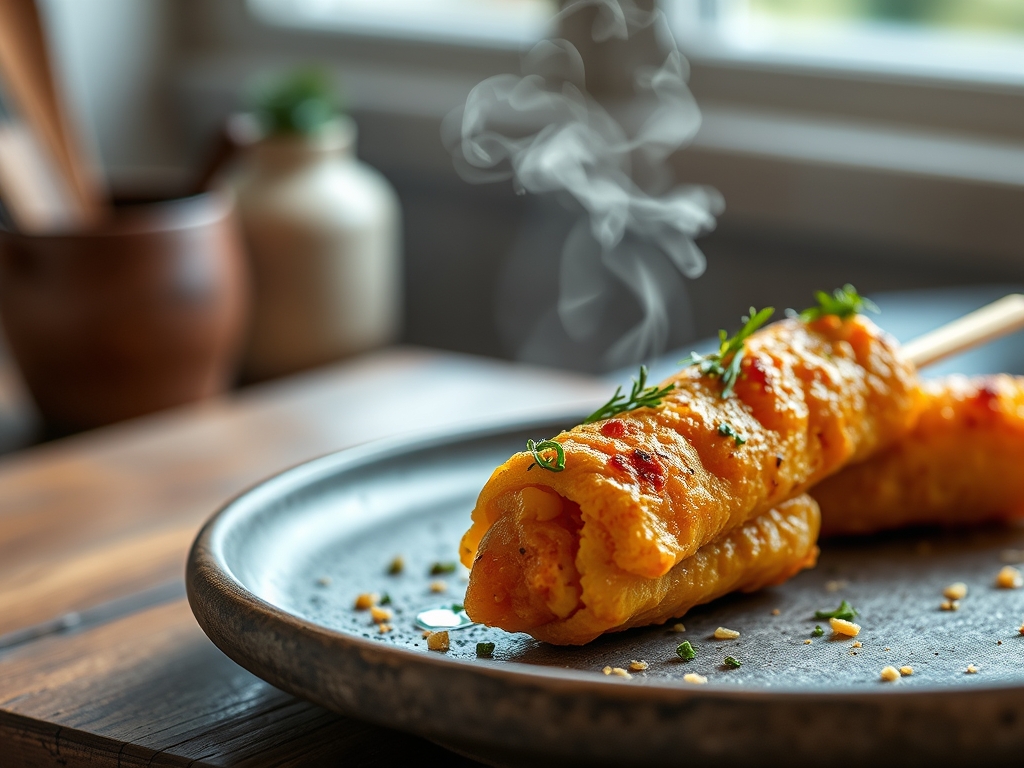
Review the Masterclass photo above. Notice the deep, mahogany-gold hue and the lack of "blowouts" or cracks. If your crust is too dark but the interior is cold, your sugar content is too high or your oil is too hot. If the crust is pale and soft, your oil temperature was too low, failing to trigger the Maillard reaction. If you see large bubbles or craters, you likely have excess moisture on the surface of the meat. A perfect crust should be smooth with a slight, uniform graininess from the cornmeal. If the tip of the dog is exposed, your dipping vessel was not deep enough to provide full immersion.
THE DEEP DIVE
Macro Nutrition Profile:
Each unit provides approximately 320 calories, with 12g of protein, 28g of carbohydrates, and 18g of fat. The cornmeal provides a modest amount of dietary fiber and B vitamins, though the primary function of this dish is high-density caloric satisfaction.
Dietary Swaps:
- Vegan: Substitute the egg with a flax-meal slurry and use unsweetened soy milk. Ensure the protein core is a plant-based alternative.
- Gluten-Free: Replace all-purpose flour with a 1:1 GF baking blend containing xanthan gum. Increase the cornmeal ratio slightly for added stability.
- Keto: This is difficult given the corn-centric nature, but a mixture of almond flour, whey protein isolate, and crushed pork rinds can simulate the texture.
Meal Prep & Reheating Science:
To maintain the molecular structure and prevent sogginess, never reheat in a microwave. The microwave agitates water molecules, which softens the starch lattice. Instead, use an air fryer or oven at 200C (400F) for five minutes. This flash-reheats the exterior, re-crisping the fats while keeping the interior succulent.
THE KITCHEN TABLE
How do I prevent the batter from dripping?
Twirl the skewer rapidly as you pull it out of the batter. This centrifugal force keeps the liquid centered on the protein until it hits the oil, where the heat instantly sets the shape.
Why is my crust falling off in chunks?
This indicates poor adhesion. You likely skipped the cornstarch dredge or the frankfurters were damp. Moisture creates steam, which pushes the crust away from the meat during the frying process.
Can I make the batter ahead of time?
You can mix the dry ingredients days in advance, but only combine with liquids right before frying. The baking powder begins reacting immediately upon hydration; waiting too long results in a flat, dense crust.
What oil is best for this audit?
Use a high smoke-point oil like peanut, canola, or grapeseed. Avoid olive oil or butter, as they will break down and smoke at the temperatures required to achieve the necessary golden-brown data points.