Stop staring at that pale, anemic loaf of bread like it is a tragic mistake; it is merely a missed opportunity for structural greatness. When we talk about Brioche Crust Enrichment, we are not just painting eggs on dough. We are engineering a high-performance protein film designed to capture heat and catalyze the Maillard reaction. This is the difference between a dull, floury exterior and a mahogany, glass-like finish that shatters under the tooth. You want that deep, lustrous bronze that looks like it was lacquered by a master carpenter. You want the kind of sheen that reflects the fluorescent lights of a high-end patisserie. Achieving this requires more than a haphazard whisk; it demands an understanding of how proteins denature and sugars caramelize under intense thermal stress. We are building a sacrificial layer of lipids and albumin that protects the delicate crumb while providing a piquant, savory counterpoint to the buttery interior. Strap in, because we are about to turn your kitchen into a high-output finishing lab where the goal is nothing less than aesthetic and textural perfection.
THE DATA MATRIX
| Metric | Specification |
|---|---|
| Prep Time | 5 Minutes |
| Execution Time | 2 Minutes (Per Application) |
| Yield | Sufficient for 4 Standard Loaves |
| Complexity (1-10) | 3 |
| Estimated Cost per Serving | $0.12 |
THE GATHERS
Ingredient Protocol:
- 2 Large Organic Egg Yolks (approx. 36g / 1.25 oz)
- 15ml / 1 tbsp Heavy Cream (36% Milkfat)
- 2g / 0.5 tsp Fine Sea Salt
- 5ml / 1 tsp Honey or Agave Nectar
- 15ml / 1 tbsp Filtered Water (Room Temperature)
Section A: Ingredient Quality Audit:
If your eggs are pale and watery, your crust will lack the deep golden hue required for professional Brioche Crust Enrichment. Low-quality eggs often have thin chalazae and weak membranes; this results in a viscous mess that streaks rather than coats. To fix this, always source pasture-raised eggs with vibrant orange yolks. If your heavy cream is clumping, it has likely undergone temperature abuse. Ensure your dairy is fresh to allow for proper emulsification. If the honey is crystallized, microwave it for five seconds to render it back into a fluid state. Using coarse salt is a rookie mistake; it will not dissolve in the fat-heavy yolk environment, leading to unsightly white speckles on your finished crust. Use a digital scale to ensure your ratios are precise, as even a 5-gram deviation in liquid can ruin the surface tension of the film.
THE MASTERCLASS
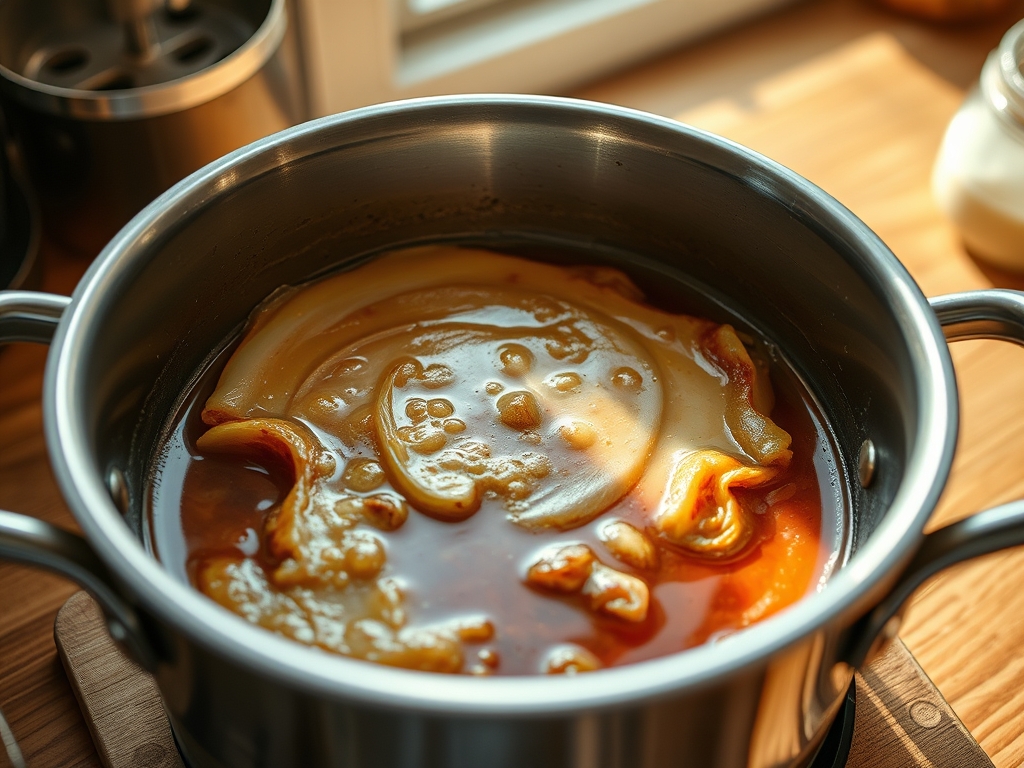
1. Homogenize the Protein Base
Place your yolks and sea salt into a small stainless steel saucier or ceramic bowl. Use a fork or a small whisk to break the membranes completely. The salt acts as a chemical denaturant, breaking down the protein strands to ensure the mixture becomes a fluid, pourable liquid rather than a snotty gel.
Pro Tip: Salt is the secret weapon for a smooth finish. It dissolves the protein clumps in the yolk, allowing the wash to flow into every crevice of the braided dough without pooling. This ensures a uniform thickness across the entire surface area.
2. Integrate the Lipid Phase
Slowly stream in the heavy cream while whisking constantly. You are looking to create a stable emulsion. The fats in the cream will provide the "shortness" to the crust, preventing the egg from becoming too rubbery or tough during the long bake required for enriched doughs.
Pro Tip: The high fat content in the cream slows down the evaporation of moisture. This allows the dough to expand fully in the oven before the crust sets, preventing the dreaded "sidewall blowout" common in high-sugar breads.
3. Hydrate and Sweeten
Add the honey and the filtered water. The water thins the mixture to a brushable consistency, while the honey provides the simple sugars necessary to accelerate the Maillard reaction at lower temperatures. Whisk until the mixture is perfectly translucent and free of bubbles.
Pro Tip: Professionals use a bench scraper to clean their workspace before this stage to ensure no stray flour enters the wash. Any raw flour introduced now will create matte spots on your otherwise glossy finish.
4. The Double-Coat Application
Using a natural bristle pastry brush, apply a thin, even layer to the dough immediately after shaping. Let it dry for ten minutes, then apply a second coat just before the loaf enters the oven. This builds the "infrastructure" of the crust in layers, much like a fine automotive paint job.
Pro Tip: Avoid silicone brushes for this task. Natural bristles hold more liquid and allow for a more delicate touch, ensuring you do not deflate the painstakingly aerated dough structure during the final proof.
Section B: Prep & Timing Fault-Lines:
The most common failure in Brioche Crust Enrichment is the "Cold Shock" error. If you apply a refrigerator-cold egg wash to a warm, proofing dough, the temperature differential can cause the surface to contract and wrinkle. Always bring your wash to room temperature before application. Furthermore, if you apply the wash too early in the proofing process, the dough will expand and "tear" the egg film, leaving pale gaps in the finished product. The sweet spot is 15 minutes before the bake. If your kitchen is too humid, the wash may not dry properly, leading to a sticky, tacky crust that clings to the parchment paper. Use a fan to circulate air if necessary.
THE VISUAL SPECTRUM
Section C: Thermal & Visual Troubleshooting:
Look at the reference photo above; note the "Tiger-Stripe" effect where the braids meet. This is caused by insufficient coverage in the folds. If your crust looks dull or matte, you likely skipped the salt or the honey, both of which are essential for light refraction. If the top of the loaf is turning black while the sides remain pale, your oven has a top-heat bias. Shield the top with foil after the first 15 minutes to allow the sides to catch up. If the crust is bubbling or "blistering," you applied the wash too thickly in one spot. Use a dry brush to infuse the pooled liquid back into the surrounding areas. The goal is a deep, mahogany glow that looks "wet" even after it has cooled.
THE DEEP DIVE
Macro Nutrition Profile:
While this is a finishing technique, it adds approximately 45 calories and 3 grams of fat per loaf. It is negligible per slice but essential for the satiety signals sent by the brain when encountering high-quality lipids.
Dietary Swaps:
For a Vegan alternative, swap the egg yolks for a mixture of soy milk and maple syrup. The lecithin in the soy milk mimics the emulsifying properties of the yolk, though you will lose some of the structural "snap." For Keto, omit the honey and use a drop of liquid monk fruit; the browning will be slower, so increase your oven temp by 5 degrees.
Meal Prep & Reheating Science:
To maintain the molecular structure of the enriched crust, never reheat brioche in a microwave. The steam will turn the protein film into a soggy, leathery mess. Use a toaster oven at 300F to "re-crisp" the lipids and restore the original crystalline structure of the crust.
THE KITCHEN TABLE
Why is my crust peeling off the bread?
This happens when there is too much flour on the surface of the dough. Always use a dry brush to remove excess flour before applying the wash. The proteins need direct contact with the starch to bond correctly.
Can I use whole eggs instead of just yolks?
You can, but the egg whites contain sulfur which can give off a slight "omelet" aroma. Yolks provide a deeper color and a richer flavor profile without the rubbery texture associated with cooked albumin.
How long can I store the leftover wash?
Store it in an airtight container in the fridge for up to 24 hours. Any longer and the salt will begin to break down the proteins too far, resulting in a watery, ineffective glaze that won't brown.
My crust is too dark but the inside is raw. Help!
Your oven is too hot or your wash has too much sugar. Reduce the honey in your next batch and ensure you are baking on the middle rack. Use an internal thermometer to check for 190F.