Listen up, kitchen operatives. We are moving beyond the realm of casual brunch and entering the theater of structural engineering. The Fried Green Tomato is not merely a side dish; it is a high-stakes lesson in acid-base batter adhesion. If you have ever suffered the indignity of a "bald" tomato—where the breading slides off in one sad, soggy sheet—you have failed the friction test. We are here to fix that. A perfect specimen requires a piquant, under-ripe fruit that possesses enough cellular integrity to withstand the thermal assault of a 375-degree oil bath. We are looking for a crystalline exterior that shatters upon impact, revealing a steaming, tart interior that has softened just enough to be luscious but not so much that it loses its structural load-bearing capacity. This is about the marriage of cornmeal grit and buttermilk acidity. We are building a fortress of flavor. If you are ready to stop playing with your food and start auditing your infrastructure, let us begin the deployment.
THE DATA MATRIX
| Metric | Specification |
|---|---|
| Prep Time | 20 Minutes |
| Execution Time | 15 Minutes |
| Yield | 4 Servings (12-16 Slices) |
| Complexity (1-10) | 4 |
| Estimated Cost per Serving | $1.85 USD |
THE GATHERS
Ingredient Protocol:
- 4 large Green Tomatoes (approx. 800g / 1.75 lbs); sliced into 1/2-inch rounds.
- 250ml / 1 cup Whole Buttermilk (The acid catalyst).
- 1 large Egg (50g); lightly beaten.
- 125g / 1 cup All-Purpose Flour (The primary adhesive).
- 120g / 1 cup Yellow Stone-Ground Cornmeal (The structural grit).
- 60g / 1/2 cup Panko Breadcrumbs (To aerate the crust).
- 10g / 2 tsp Smoked Paprika.
- 5g / 1 tsp Cayenne Pepper.
- 15g / 1 tbsp Kosher Salt.
- 500ml / 2 cups Peanut Oil or Grapeseed Oil (High smoke point lipids).
Section A: Ingredient Quality Audit:
If your tomatoes feel soft to the touch, they are too far gone. An over-ripe tomato contains too much internal moisture; as this water turns to steam, it will blow the breading right off the fruit. Technical Fix: If you must use slightly riper tomatoes, salt the slices and let them sit on a wire rack for 10 minutes to render excess moisture before dredging. If your buttermilk is thin and watery, it lacks the viscous quality needed to hold the flour. Technical Fix: Whisk in a tablespoon of Greek yogurt to increase the protein density and improve the "cling" factor.
THE MASTERCLASS
Step 1: The Osmotic Pre-Treatment
Lay your tomato slices on a clean workstation. Dust both sides lightly with kosher salt. This initiates osmosis, drawing out surface moisture that would otherwise steam-detach your crust. Use a digital scale to ensure your dry spice ratios are exact before mixing.
Pro Tip: This step creates a "tacky" surface. The salt breaks down a microscopic layer of the tomato skin, allowing the flour to bond at a molecular level rather than just sitting on top.
Step 2: The Primary Adhesive Layer
Dredge each slice in the all-purpose flour. Shake off every bit of excess. You want a ghostly veil, not a winter coat. Use a bench scraper to keep your station clear of flour clumps that can ruin the uniformity of your coating.
Pro Tip: Flour acts as the bridge between the wet fruit and the wet batter. If this layer is too thick, it creates a gummy barrier that prevents the crust from crisping.
Step 3: The Acid-Base Submersion
Whisk the buttermilk and egg in a shallow saucier or wide bowl until fully emulsified. Dip the floured slices into the liquid, ensuring total coverage. Let the excess drip off for exactly three seconds before moving to the final station.
Pro Tip: The lactic acid in the buttermilk reacts with the proteins in the egg to create a protein-dense "glue." This is the secret to a crust that survives the flip in the pan.
Step 4: The Structural Reinforcement
Press the wet slices into the mixture of cornmeal, panko, and spices. Do not just toss them; press the breading into the tomato with the palm of your hand to ensure the cornmeal grains are embedded.
Pro Tip: Using stone-ground cornmeal provides a variegated texture. The larger particles create "crags" that catch the oil, increasing the surface area for the Maillard reaction to occur.
Step 5: Thermal Deployment
Heat your oil in a heavy cast-iron skillet to 375 degrees Fahrenheit (190 Celsius). Use an infrared thermometer to verify. Fry the slices in batches, ensuring they do not touch. Flip once the edges show a deep mahogany hue.
Pro Tip: Crowding the pan drops the oil temperature instantly. This causes the crust to absorb oil rather than sear, resulting in a greasy, failed audit. Keep the oil "active" around the edges of each slice.
Section B: Prep & Timing Fault-Lines:
The most common human error is the "Dredge Delay." If you bread your tomatoes and let them sit for twenty minutes before frying, the moisture from the tomato will hydrate the flour and cornmeal, turning your crisp coating into a soggy paste. Technical Fix: Work in a "just-in-time" manufacturing flow. Bread only what can fit in the pan immediately. Furthermore, if your oil temperature fluctuates, you will lose the "shatter" effect. Always allow the oil two minutes to recover its thermal energy between batches.
THE VISUAL SPECTRUM
Section C: Thermal & Visual Troubleshooting:
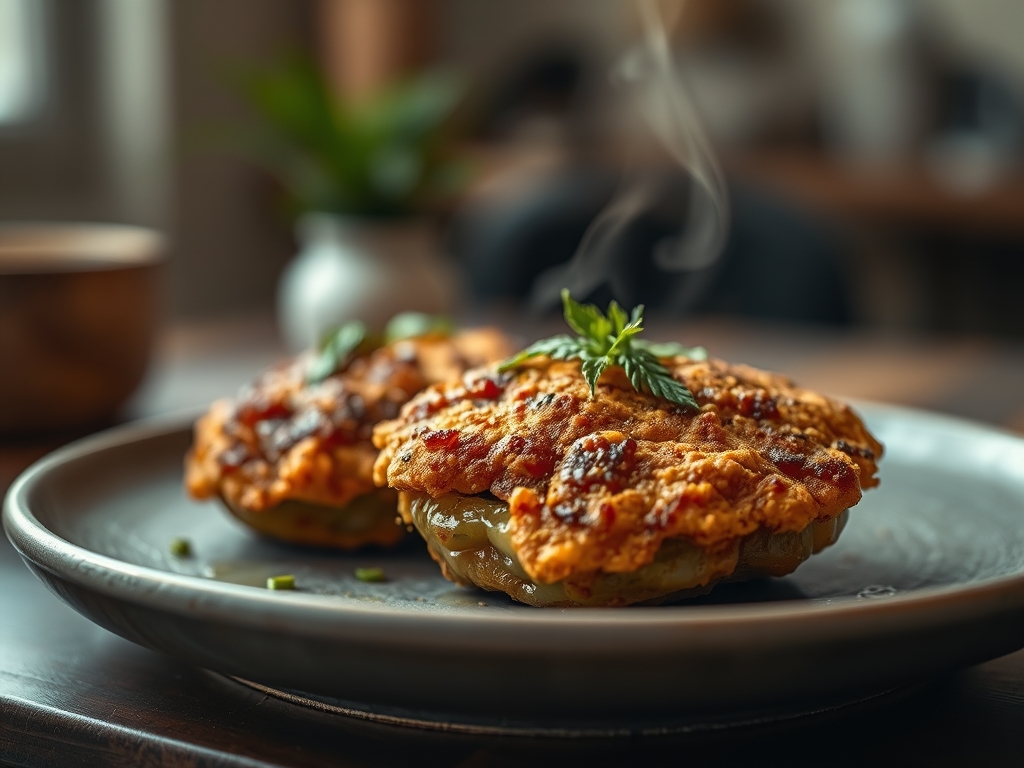
Observe the Masterclass photo. Notice the golden-brown gradient and the visible "peaks" of cornmeal. If your tomatoes look pale or "blond," your oil temperature was too low, or you lacked enough paprika to infuse the crust with color. If the breading is dark brown but the tomato inside is still hard and raw, your oil was too hot; the exterior carbonized before the heat could penetrate the fruit's cellular walls. If you see "bald spots" where the crust has fallen away, refer back to Step 1; you skipped the salt-dry process. A successful audit results in a crust that remains attached even when sliced with a dull fork.
THE DEEP DIVE
Macro Nutrition Profile:
A standard serving (4 slices) provides approximately 280 calories, 14g of fat, 32g of carbohydrates, and 6g of protein. The high fat content is primarily from the frying medium; using a high-stability oil like peanut oil ensures fewer oxidized lipids.
Dietary Swaps:
- Vegan: Replace buttermilk with soy milk plus 1 tbsp lemon juice; use a "flax egg" (ground flaxseed and water) as the binder.
- Keto: Swap flour for coconut flour and use crushed pork rinds (chicharrones) instead of cornmeal and panko.
- GF: Utilize a 1-to-1 gluten-free flour blend and certified gluten-free cornmeal.
Meal Prep & Reheating Science:
Fried Green Tomatoes are best consumed within the first 15 minutes of production. However, to maintain molecular structure for leftovers, do not use a microwave. The microwave agitates water molecules, steaming the crust from the inside out. Instead, use an air fryer at 350 degrees for 4 minutes to re-crisp the lipid layer and aerate the panko.
THE KITCHEN TABLE
Why does my breading fall off in the pan?
This is usually due to surface moisture. If the tomato skin is wet when it hits the flour, it creates a steam barrier. Ensure tomatoes are salted and patted dry before you begin the dredging sequence.
Can I use red tomatoes instead?
Negative. Red tomatoes have undergone enzymatic softening and have a higher sugar content. They will turn into a structural slurry in the high-heat oil. Stick to firm, un-ripened green specimens for the necessary structural integrity.
What is the best oil for frying?
Peanut oil is the gold standard due to its high smoke point and neutral flavor profile. If allergies are a concern, grapeseed or avocado oil are excellent high-heat alternatives that won't break down into acrid compounds.
How thick should I slice the tomatoes?
Aim for 1/2-inch (1.25cm). Any thinner and the tomato disintegrates; any thicker and the exterior burns before the interior reaches the desired "al dente" texture. Precision slicing is non-negotiable for a consistent thermal audit.