Forget the soggy, grey cubes of disappointment that haunt the bottom of poorly constructed stir-fry bowls. We are here to discuss the architectural integrity of the perfect Crispy Tofu Coating; a structural marvel that requires more than just a passing acquaintance with a frying pan. Achieving that shatter-crisp exterior while maintaining a silken, custard-like interior is an exercise in moisture management and starch suspension. It is about the violent transition of liquid to steam and the subsequent fortification of a starch matrix. When you bite through a properly executed crust, you should experience a distinct audible snap, followed by the immediate release of savory heat. This is not mere cooking; it is the deliberate dehydration of a porous starch barrier to create a pressurized environment for the protein within. We are auditing your kitchen workflow to ensure that every millimeter of surface area is optimized for maximum crunch and zero grease retention. Prepare to abandon your amateur habits and embrace the high-velocity world of precision frying.
THE DATA MATRIX
| Metric | Specification |
|---|---|
| Prep Time | 20 Minutes |
| Execution Time | 15 Minutes |
| Yield | 4 Servings |
| Complexity (1-10) | 4 |
| Estimated Cost per Serving | $1.85 |
THE GATHERS
Ingredient Protocol:
- 450g / 16oz Extra-Firm Tofu (Pressed and drained)
- 125g / 1 cup Cornstarch (The primary structural agent)
- 15g / 1 tbsp Garlic Powder (Dehydrated for flavor stability)
- 5g / 1 tsp Smoked Paprika (For color and depth)
- 3g / 0.5 tsp Fine Sea Salt (To penetrate the moisture barrier)
- 60ml / 0.25 cup Neutral Oil (High smoke point, such as Grapeseed)
- 15ml / 1 tbsp Toasted Sesame Oil (For aromatic complexity)
Section A: Ingredient Quality Audit:
The most common failure point in a Crispy Tofu Coating is the moisture content of the raw material. If your tofu feels spongy or weeps water upon contact with the cutting board, your crust will fail. Use a digital scale to ensure your starch-to-spice ratio is exact; guessing leads to a muddy flavor profile. If your cornstarch has been sitting in a humid pantry, it may have clumped. Sift it through a fine-mesh strainer to aerate the powder. Sub-par tofu often lacks structural density; if the block crumbles during the dicing phase, it likely contains too much coagulant. To fix this, par-boil the cubes in salted water for two minutes to tighten the protein structure before you attempt the starch application.
THE MASTERCLASS
1. The Moisture Extraction Phase
Slice the tofu into uniform 2cm cubes using a sharp chef knife or a bench scraper for clean, vertical edges. Lay the cubes on a lint-free towel and apply 2kg of weight for 15 minutes. This creates a denser protein substrate that can withstand the high-heat environment of the pan without fracturing.
Pro Tip: This step is about internal pressure. Removing excess water prevents the tofu from steaming itself from the inside out, which would otherwise compromise the adhesion of your coating.
2. The Starch Infusion and Aeration
In a large stainless steel bowl, whisk the cornstarch, garlic powder, paprika, and salt. Toss the dried tofu cubes into the mixture, ensuring every face of the cube is fully encapsulated. Use a saucier or a large sieve to shake off any excess powder; a thick, gummy layer is the enemy of a refined crunch.
Pro Tip: The starch must be applied immediately before frying. If the tofu sits in the starch for too long, the residual moisture will hydrate the powder into a viscous paste rather than a dry, fryable shell.
3. Thermal Conductivity and Searing
Heat your oil in a heavy-bottomed cast iron skillet until it reaches 190C (375F). Use an infrared thermometer to verify the surface temperature. Carefully place the cubes in the oil, ensuring they do not touch. Crowding the pan will drop the temperature and cause the coating to absorb oil rather than repel it.
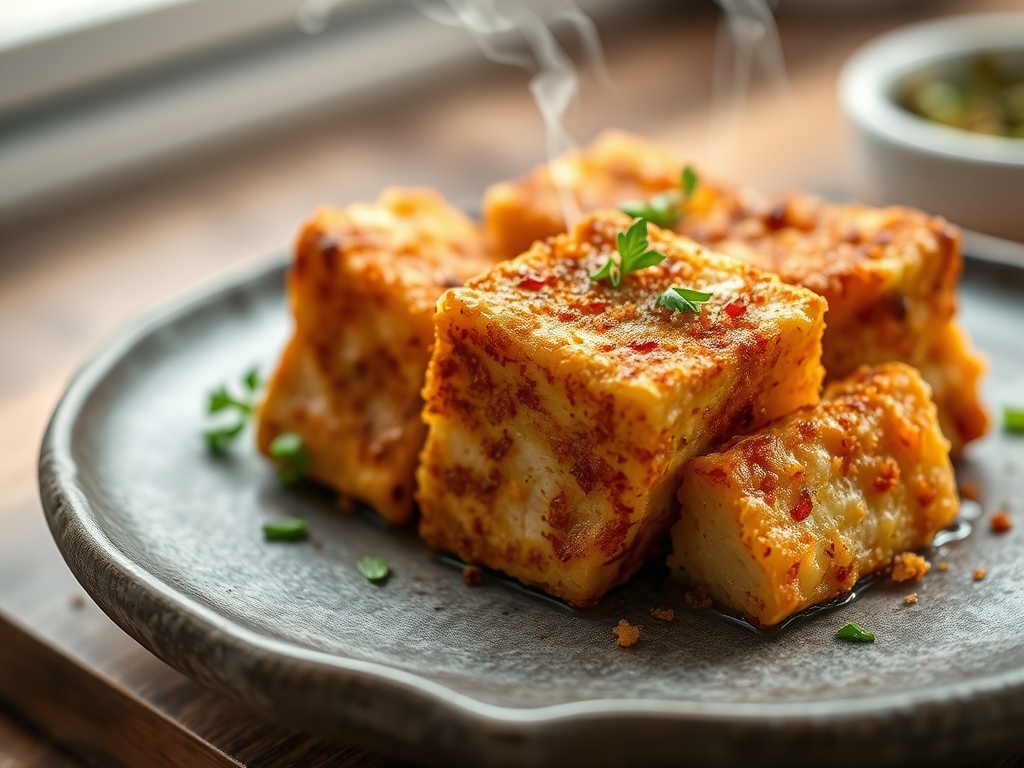
Pro Tip: Proper thermal management ensures that the starch granules undergo immediate gelatinization and subsequent dehydration. This creates the porous, airy texture seen in the reference photo.
4. The Final Render and Seasoning
Flip the cubes every 3 minutes until all six sides are golden brown and resonant when tapped with a pair of metal tongs. Transfer the tofu to a wire cooling rack rather than a paper towel. This allows air to circulate around the entire cube, preventing the bottom from becoming soggy due to trapped steam.
Pro Tip: Using a wire rack preserves the molecular structure of the crust. If you place hot tofu on a flat surface, the steam has nowhere to go but back into the coating.
Section B: Prep & Timing Fault-Lines:
The most frequent human error is "The Pan Panic." This occurs when a cook flips the tofu too early, tearing the delicate starch skin before it has fully set. You must wait for the Maillard reaction to provide a natural release from the cooking surface. Another timing error is the "Cold Oil Plunge." If the oil is not at the target temperature, the starch will simply dissolve into a greasy slurry. Always use a digital scale for your ingredients and a thermometer for your oil; guessing is the fastest way to ruin a high-quality protein.
THE VISUAL SPECTRUM
Section C: Thermal & Visual Troubleshooting:
Look closely at the reference image. The ideal Crispy Tofu Coating should exhibit a matte, pale-gold finish with microscopic bubbles across the surface. If your tofu looks dark brown or burnt, your oil temperature was too high or your spices contained too much sugar. If the coating looks translucent or "wet," you did not use enough starch or failed to shake off the excess moisture. Dull, greyish tofu indicates a lack of seasoning or old oil that has lost its ability to transfer heat efficiently. To fix a dull appearance, infuse your finishing oil with a pinch of turmeric or paprika for a vibrant, golden hue.
THE DEEP DIVE
Macro Nutrition Profile:
A standard serving of this crispy tofu provides approximately 18g of protein, 12g of healthy fats, and 15g of complex carbohydrates. While the frying process adds caloric density, the use of cornstarch ensures a lower fat absorption rate compared to flour-based batters.
Dietary Swaps:
For a Keto-compliant version, replace the cornstarch with unflavored whey protein isolate or almond flour mixed with xanthan gum. For a Gluten-Free application, cornstarch is naturally safe, but ensure your soy sauce or seasoning blends are certified GF. To make this piquant, add a dash of cayenne to the starch mixture.
Meal Prep & Reheating Science:
To maintain the molecular structure during reheating, avoid the microwave at all costs. The microwave excites water molecules, which will turn your crisp coating into a rubbery mess. Instead, use an air fryer or a toaster oven at 200C for five minutes. This flash-reheats the exterior and re-activates the starch's structural integrity.
THE KITCHEN TABLE
Why is my tofu coating falling off in the pan?
This usually happens because the tofu was too wet before coating. The moisture creates a layer of steam between the protein and the starch, preventing a solid bond. Ensure the tofu is bone-dry before it touches the starch.
Can I use flour instead of cornstarch for the coating?
Flour contains gluten, which creates a chewy, bread-like texture rather than a crisp snap. Cornstarch is a pure starch that dehydrates more efficiently, leading to a much lighter and crunchier finish.
What is the best oil for frying crispy tofu?
Choose an oil with a high smoke point and neutral flavor, such as grapeseed, avocado, or refined peanut oil. Avoid extra virgin olive oil, as it will break down and smoke at the temperatures required for this recipe.
How do I get the spices to stick to the tofu?
The spices should be thoroughly integrated into the cornstarch before coating. This ensures an even distribution of flavor and prevents the spices from burning upon direct contact with the hot oil.
Why does my tofu get soggy after five minutes?
Steam is the enemy. If you pile the hot tofu in a bowl, the residual heat creates steam that softens the crust. Always cool your crispy tofu on a wire rack to maintain maximum airflow.