Listen up, gluten-engineers and lipid-enthusiasts. We are moving beyond the realm of mere bread and entering the high-stakes world of structural dough architecture. If your current focaccia resembles a dry sponge or a lackluster sheet of cardboard, your primary failure is likely a lack of hydraulic pressure within the crumb. To achieve that legendary, dimpled landscape where the surface is a mosaic of golden craters, you must master the Focaccia Oil Infusion. This is not just drizzling fat over dough; it is a tactical deployment of lipids to ensure the exterior fries while the interior steams. We are looking for a specific viscous tension that allows the dough to bubble and blister without collapsing under its own weight. When the heat hits that oil-saturated crust, the Maillard reaction accelerates, creating a piquant, shatter-crisp finish that contrasts against a cloud-like interior. This is a technical audit of your kitchen capabilities. We are here to optimize your hydration ratios and maximize your flavor extraction through precision engineering.
THE DATA MATRIX
| Metric | Specification |
|---|---|
| Prep Time | 20 Minutes (Active) |
| Execution Time | 18 to 24 Hours (Fermentation Included) |
| Yield | One 9×13 Inch Sheet Pan |
| Complexity (1-10) | 4 (Focus on patience and hydration) |
| Estimated Cost per Serving | $0.85 USD |
THE GATHERS
Ingredient Protocol:
- 500g / 3.75 cups High-Protein Bread Flour (12.5% protein minimum)
- 400ml / 1.75 cups Filtered Water (Room temperature)
- 10g / 2 tsp Fine Sea Salt
- 4g / 1.25 tsp Instant Yeast
- 120ml / 0.5 cup Extra Virgin Olive Oil (Divided for the Focaccia Oil Infusion)
- 5g / 1 tbsp Fresh Rosemary (Needles stripped and bruised)
- 3g / 1 tsp Flaky Finishing Salt
Section A: Ingredient Quality Audit:
If your flour has a protein content below 12%, your gluten network will fail to trap the carbon dioxide produced during the long ferment. This results in a flat, dense slab rather than an aerated masterpiece. Fix this by adding 10g of vital wheat gluten to your dry mix. If your olive oil lacks that peppery bite, it is likely oxidized or refined. Always use cold-pressed oil stored in dark glass. If the oil feels greasy rather than flavorful, infuse it with aromatics at a low temperature before application to break down the heavy lipid chains and improve the sensory profile.
THE MASTERCLASS
1. Hydration and Autolyse
Combine your flour and water in a large glass bowl and mix until no dry streaks remain. Let this sit for 30 minutes. This allows the flour to fully hydrate and begin gluten development without mechanical intervention. Pro Tip: Use a digital scale for this step. Volumetric measurements are the enemy of consistency; a "cup" of flour can vary by 20% depending on how tightly it is packed.
2. The Salt and Yeast Integration
Sprinkle your yeast and salt over the hydrated mass. Use a wet hand to pinch and fold the dough until the granules are fully dissolved and the dough feels elastic. Pro Tip: A plastic bench scraper is your best friend here. Use it to clean the sides of the bowl and turn the dough over itself, ensuring every gram of material is incorporated into the matrix.
3. Cold Fermentation Protocol
Cover the bowl tightly and refrigerate for 18 to 24 hours. This low-temperature environment slows down the yeast, allowing complex organic acids to develop. This is where the flavor is built. Pro Tip: Cold fermentation makes the high-hydration dough easier to handle. The cold temperatures increase the viscosity of the dough, making it less sticky when you perform your final folds.
4. The Focaccia Oil Infusion
In a small saucier, gently heat 60ml of olive oil with the rosemary needles. Do not let it simmer; you only want to render the essential oils from the herbs into the lipid base. Let this cool completely. Pro Tip: Infusing the oil before it hits the dough ensures that the herbal notes are distributed evenly through the crust rather than just sitting on top where they might burn.
5. The Dimpling Manifold
Transfer the dough to a heavily oiled sheet pan. Let it proof at room temperature until it doubles in size and looks jiggly. Pour the remaining infused oil over the top. Use your fingertips to press deep into the dough, creating the signature dimpled pockets. Pro Tip: Press all the way down until you feel the metal of the pan. This creates "wells" where the oil pools, effectively deep-frying the bottom and sides of the dough as it bakes.
Section B: Prep & Timing Fault-Lines:
The most common failure is rushing the room-temperature proof. If the dough is too cold when it enters the oven, it will not achieve the necessary "oven spring" and the dimples will fill back in. Ensure the dough is bubbly and responsive to the touch. If your kitchen is below 68 degrees Fahrenheit, use a proofing box or the "pilot light" trick in your oven to maintain a consistent 75-degree environment.
THE VISUAL SPECTRUM
Section C: Thermal & Visual Troubleshooting:
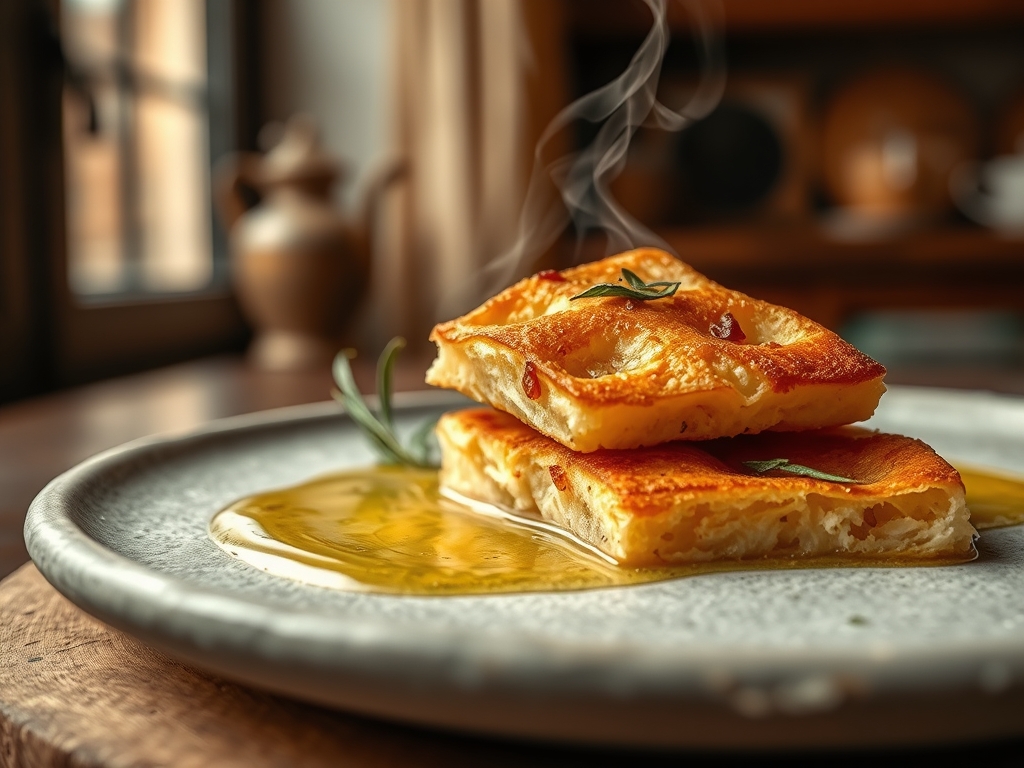
Look at the reference image. Note the high-contrast browning and the translucent "windows" in the bubbles. If your crust is pale, your oven temperature is too low; you need a minimum of 425 degrees Fahrenheit. If the bottom is soggy, you did not use enough oil in the initial pan prep. The oil acts as a heat conductor. If the rosemary is black and bitter, you likely applied it to a dry surface. Ensure every herb needle is submerged in the Focaccia Oil Infusion to protect it from direct thermal radiation.
THE DEEP DIVE
Macro Nutrition Profile
Per serving (approx 100g): 280 Calories, 14g Fat, 32g Carbohydrates, 6g Protein. The high fat content is primarily heart-healthy monounsaturated fats from the olive oil.
Dietary Swaps
- Vegan: This recipe is naturally vegan. Ensure your sugar (if used for yeast activation) is bone-char free.
- Gluten-Free: Substitute with a high-quality 1:1 GF flour blend containing xanthan gum. Increase water by 10% as GF flours are highly absorbent.
- Keto: Replace bread flour with a mix of almond flour, vital wheat gluten, and oat fiber. Note that the texture will be significantly denser.
Meal Prep & Reheating Science
To maintain the molecular structure, never microwave focaccia. The microwave agitates water molecules, making the bread rubbery. Reheat in a 350-degree oven for 5 minutes. This re-crisps the lipid-saturated exterior and softens the internal starches without dehydrating the crumb.
THE KITCHEN TABLE
Why is my focaccia tough instead of fluffy?
You likely over-worked the dough or used flour with too much protein without enough water. High hydration (80% or more) is essential for a soft, open crumb. Ensure you are not adding extra flour during the folding process.
Can I use butter instead of olive oil?
Butter contains water and milk solids which will burn at the high temperatures required for focaccia. Stick to high-quality olive oil for the authentic Focaccia Oil Infusion to achieve the correct thermal conductivity and flavor profile.
How do I get bigger bubbles?
Bigger bubbles are a result of long, cold fermentation and minimal degassing. When you move the dough to the pan, be extremely gentle. Do not pop the large air pockets that have formed; they are the key to texture.
My oil is pooling too much on top?
This is actually the goal. Those pools of oil create the "fried" texture of the crust. As the dough rises in the oven, it will absorb some of that fat, while the rest creates the golden, dimpled finish.
What if I don't have a saucier?
Any small, heavy-bottomed pan will work for the infusion. The goal is even heat distribution so the aromatics don't scorch. You can even use a microwave-safe glass bowl in short 20-second bursts to warm the oil.