Listen to the sound of a structural failure. It is the wet, apologetic thud of a soggy casing that lacked the tensile strength to contain its piquant payload. We are not here to make snacks; we are here to engineer edible armor. Welcome to the Eggroll Wrapper Audit. In the high-stakes theater of deep-frying, your dough is the primary containment vessel. If the hydration levels are off or the gluten network is underdeveloped, the entire operation collapses into a greasy heap of regret. We demand a wrapper that offers a shattered-glass crunch upon impact while maintaining a supple, translucent interior. This requires more than a recipe. It requires a rigorous inspection of protein content, moisture migration, and thermal resistance. We are looking for that perfect golden hue that signals a successful Maillard reaction without crossing the threshold into carbonization. Grab your digital scale and clear the workbench. We are about to stress-test the very foundation of the fried parcel to ensure your culinary infrastructure is impenetrable, delicious, and technically flawless.
THE DATA MATRIX
| Metric | Specification |
|---|---|
| Prep Time | 45 Minutes |
| Execution Time | 20 Minutes |
| Yield | 24 Wrappers |
| Complexity (1-10) | 7 |
| Estimated Cost per Serving | $0.45 |
THE GATHERS
Ingredient Protocol:
- 500g / 4 cups All-Purpose Flour (11% protein minimum)
- 1 large Egg (approx. 50g / 1.7 oz), beaten
- 180ml / 0.75 cup Warm Water (approx. 40C / 105F)
- 5g / 1 tsp Fine Sea Salt
- 30g / 4 tbsp Cornstarch (for dusting and structural separation)
Section A: Ingredient Quality Audit:
The most common failure point in this audit is low-protein flour. If your flour lacks the necessary gluten-forming proteins, the wrapper will tear during the stretching phase. Fix: Use a flour with at least 11 to 12 percent protein. If your dough feels overly brittle, the hydration is likely insufficient. Fix: Add warm water in 5ml increments until the mass becomes cohesive. Finally, if the wrappers stick together after cutting, your dusting agent is compromised. Fix: Use cornstarch rather than flour for dusting; cornstarch lacks the moisture-absorbing proteins of flour and creates a superior non-stick barrier.
THE MASTERCLASS
1. Dry Mass Integration
Combine the flour and sea salt on a clean workspace or in a large stainless steel mixing bowl. Create a deep well in the center of the mound to contain the liquid phase.
Pro Tip: Use a digital scale for this step. Volumetric measurements are notoriously unreliable in pastry physics; a few grams of extra flour can turn a supple dough into an unworkable brick.
2. Hydration and Emulsification
Pour the beaten egg and warm water into the well. Use a fork or a bench scraper to gradually incorporate the flour from the inner walls of the well into the liquid center until a shaggy mass forms.
Pro Tip: Warm water (40C) helps to aerate the starch granules and initiates faster gluten development than cold water, reducing the total resting time required for the dough.
3. Kneading for Tensile Strength
Transfer the dough to a flat surface and knead vigorously for 8 to 10 minutes. You are looking for a smooth, elastic surface that springs back when poked.
Pro Tip: This mechanical action aligns the gluten strands. Use your bench scraper to keep the surface clean and prevent the dough from tearing as you build the structural matrix.
4. The Molecular Rest
Wrap the dough tightly in plastic film and let it sit at room temperature for at least 30 minutes.
Pro Tip: Resting allows the gluten network to relax and the moisture to fully infuse the starch. This prevents the dough from "snapping back" when you attempt to roll it to a translucent thickness.
5. Precision Rolling and Partitioning
Divide the dough into four equal quarters. Roll each section out on a surface heavily dusted with cornstarch until it is thin enough to see the grain of the wood beneath it. Use a bench scraper or a sharp knife to cut 15cm (6-inch) squares.
Pro Tip: Professional kitchens often use a pasta machine for this step to ensure absolute uniformity in thickness, which is critical for even frying.
Section B: Prep & Timing Fault-Lines:
Temperature control is the silent killer of the eggroll. If your dough is too cold, it will be resistant to stretching; if it is too warm, the fats will render prematurely, leading to a greasy texture. Always work in a cool environment. Furthermore, timing the fry is essential. If the wrappers sit too long after being filled, moisture from the interior will migrate to the shell, causing "blowouts" in the fryer.
THE VISUAL SPECTRUM
Section C: Thermal & Visual Troubleshooting:
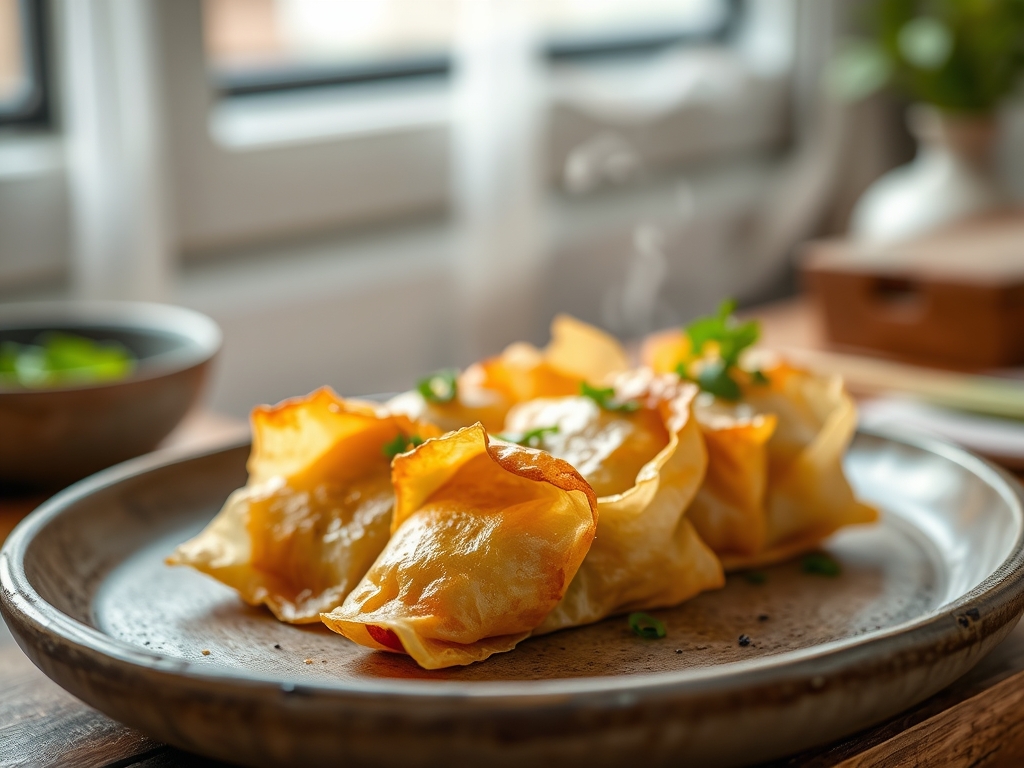
Observe the Masterclass photo above. Note the micro-bubbles on the surface of the fried parcel; these are the result of rapid steam escape and indicate a perfectly hydrated dough. If your wrappers are smooth and dark brown, your oil is too hot, or your dough lacks sufficient aeration. If the color is pale and the texture is leathery, your oil temperature has dipped below the 175C (350F) threshold. A perfect audit result yields a "shatter-crisp" texture with a uniform, golden-blonde gradient. If you see dark spots, it means the flour was not sifted properly, leading to localized burning of starch clumps.
THE DEEP DIVE
- Macro Nutrition Profile: Each individual wrapper contains approximately 85 calories, 18g of carbohydrates, 3g of protein, and 1g of fat. The frying process will significantly alter the lipid profile depending on the oil used.
- Dietary Swaps: For a vegan audit, replace the egg with 50ml of aquafaba (chickpea liquid) to maintain the binding properties. For gluten-free requirements, a blend of rice flour and xantham gum is necessary, though the tensile strength will be significantly lower.
- Meal Prep & Reheating Science: To maintain the molecular structure, store raw wrappers between sheets of parchment paper in an airtight container for up to 3 days. When reheating fried parcels, avoid the microwave; use an air fryer or oven at 200C (400F) to re-evaporate surface moisture and restore the crunch.
THE KITCHEN TABLE
Why do my wrappers bubble excessively?
This is usually caused by high moisture content in the dough or trapped air. Ensure you roll the dough thin and press out air pockets when sealing to prevent these structural blisters from bursting.
Can I substitute butter for the egg?
No. The egg provides protein for structure and lecithin for emulsification. Butter would introduce too much fat, leading to a short, crumbly pastry rather than a high-tensile wrapper.
My dough is too "snappy" to roll out. Help!
The gluten is over-stressed. Cover the dough and let it rest for another 15 minutes. This allows the proteins to relax, making the mass more submissive to the rolling pin.
How do I prevent the edges from drying out?
Keep a damp (not soaking) lint-free kitchen towel over your stack of cut wrappers. This maintains the local humidity and prevents the edges from becoming brittle and unsealable.
What is the best oil for frying these?
Use an oil with a high smoke point and neutral flavor profile, such as peanut or grapeseed oil. These allow the piquant flavors of the filling to shine without interference.