The scent of vaporizing peanut oil and the sharp, piquant sting of freshly sliced Vidalia onions represent the initial phase of a high-stakes culinary construction project. We are not merely frying vegetables; we are engineering a structural exoskeleton designed to withstand the violent transition from liquid to solid state. The secret to this architectural marvel lies in the Onion Ring Batter. If the viscosity is too low, the coating sloughs off like failed cladding on a skyscraper. If it is too dense, you are eating a dough ball with a sad, steamed vegetable trapped inside. We demand a shatter-crisp exterior that yields to a tender, translucent allium heart. This is about the physics of adhesion and the chemistry of carbonation. We are building a golden-brown barrier that protects the moisture of the onion while creating a jagged, salt-flecked topography that begs for a dip in a high-acid condiment. Prepare your workspace; we are about to execute a masterclass in deep-fried infrastructure that renders all previous appetizers obsolete.
THE DATA MATRIX
| Metric | Specification |
|---|---|
| Prep Time | 20 Minutes |
| Execution Time | 15 Minutes |
| Yield | 4-6 Servings |
| Complexity | 4 / 10 |
| Estimated Cost per Serving | $0.85 USD |
THE GATHERS
Ingredient Protocol:
- 2 Large Yellow or Vidalia Onions (approx. 500g / 1.1 lbs)
- All-Purpose Flour (250g / 2 cups)
- Cornstarch (60g / 0.5 cup)
- Baking Powder (10g / 2 tsp)
- Smoked Paprika (5g / 1 tsp)
- Ice-Cold Club Soda or Pale Ale (355ml / 1.5 cups)
- Kosher Salt (15g / 1 tbsp)
- Neutral High-Smoke Point Oil (2L / 2.1 qt)
Section A: Ingredient Quality Audit:
Sub-par raw materials are the primary cause of structural failure. If your onions are sprouting or soft, the sugar content has likely shifted; this leads to uneven browning and a bitter aftertaste. Solution: Use only firm, heavy-for-their-size bulbs. If your flour is clumpy, it indicates moisture absorption which will inhibit the formation of a crisp crust. Always sift your dry goods through a fine-mesh strainer to aerate the particles. Finally, if your carbonated liquid is room temperature, the CO2 will escape too quickly. Use a liquid that is bordering on freezing to maximize the "poof" factor when the cold batter hits the 375 degree oil.
THE MASTERCLASS
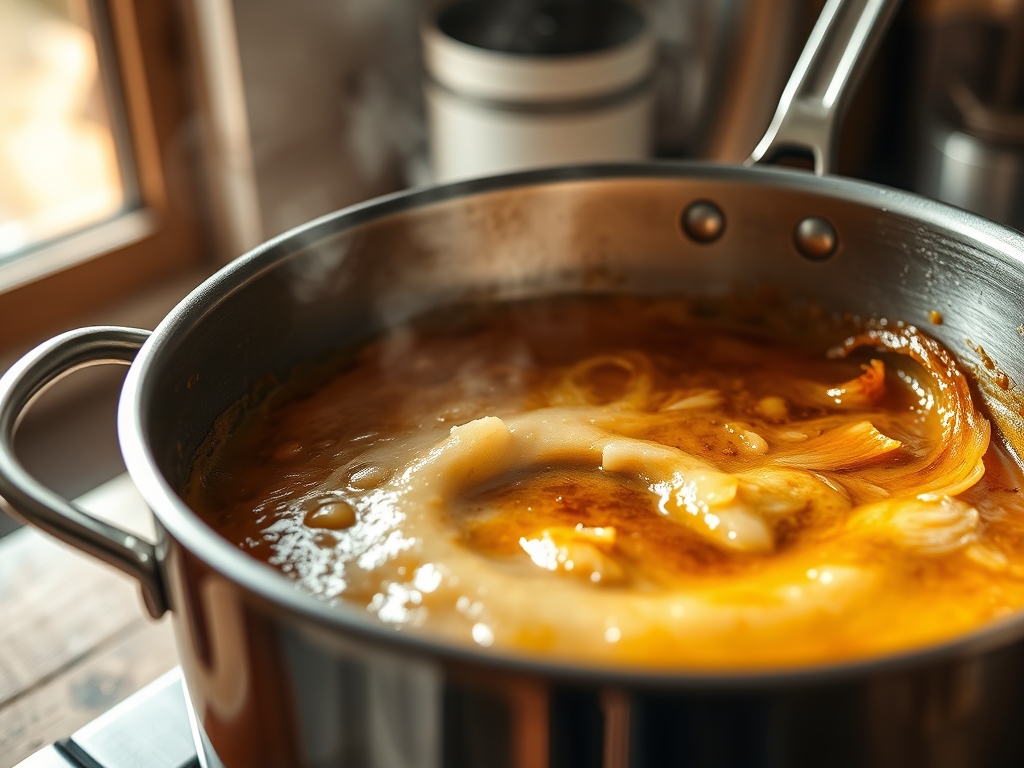
1. The Allium Geometry
Slice your onions into consistent 1/2 inch rounds. Separate the rings and discard the thin, papery inner membrane if it detaches. This membrane is a common point of failure for Onion Ring Batter adhesion; removing it ensures the batter grips the flesh directly.
Pro Tip: Use a sharp mandoline or a heavy chef's knife and a bench scraper to move the rings without bruising the cellular structure.
2. The Pre-Coat Foundation
Toss the raw rings in a bowl with a light dusting of cornstarch and salt. This acts as a primer. Without this dry layer, the moisture on the surface of the onion will cause the wet batter to slide off during the frying process.
Pro Tip: Use a large stainless steel bowl to ensure even distribution; the goal is a microscopic layer of starch that absorbs surface humidity.
3. The Viscosity Calibration
In a separate saucier or mixing bowl, whisk the flour, cornstarch, baking powder, and spices. Slowly pour in the ice-cold liquid while whisking gently. Do not overwork the gluten. Stop when the batter resembles a thick pancake mix that coats the back of a spoon.
Pro Tip: Use a digital scale to measure by weight rather than volume. Precision in the liquid-to-solid ratio is the difference between a soggy mess and a crisp shell.
4. The Thermal Immersion
Heat your oil to exactly 375 degrees Fahrenheit. Dip the rings into the batter, let the excess drip off for two seconds, and gently drop them into the oil. Work in small batches to avoid dropping the oil temperature.
Pro Tip: Use an infrared thermometer or a probe to monitor the oil. If the temperature dips below 350, the rings will absorb oil and become greasy rather than crispy.
5. The Final Cure
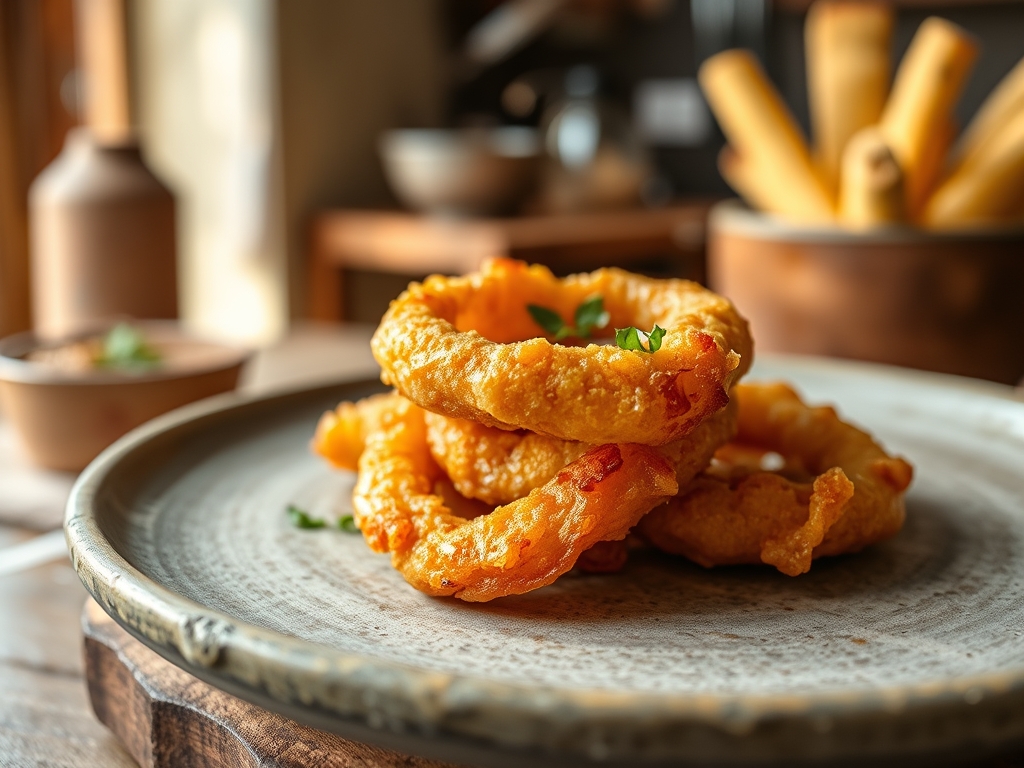
Fry for 2 to 3 minutes per side until the color matches the deep amber seen in the reference photo. Remove with a slotted spoon or spider and place immediately on a wire cooling rack.
Pro Tip: Never drain on paper towels. Paper towels trap steam under the ring, which softens the bottom layer of the batter within seconds. A wire rack allows for 360-degree airflow.
Section B: Prep & Timing Fault-Lines:
The most common human error is the "Batch Lag." If you batter all the onions at once and let them sit, the salt in the batter will draw water out of the onion, thinning the mixture and ruining the bond. Batter each ring immediately before it enters the oil. If your oil is smoking, you have surpassed the flash point of your fats; discard and restart. Consistent heat management is the hallmark of a professional fry station.
THE VISUAL SPECTRUM
Section C: Thermal & Visual Troubleshooting:
Observe the reference image: note the "craggy" texture and the lack of bald spots on the onion. If your rings look smooth and glassy, your batter is too thin; add a tablespoon of flour. If they look like lumpy bread, the batter is too thick; whisk in a splash of cold soda. If the color is pale but the onion is mushy, your oil was too cold. If the exterior is dark brown but the onion inside is still crunchy and raw, your oil was too hot, causing the sugars to caramelize before the heat could penetrate the allium core.
THE DEEP DIVE
Macro Nutrition Profile:
A standard serving contains approximately 320 calories, 18g of fat, 38g of carbohydrates, and 4g of protein. While not a health food, the use of cornstarch and carbonation reduces the total oil absorption compared to traditional heavy flour batters.
Dietary Swaps:
- Vegan: This recipe is naturally vegan if using club soda or a vegan-certified beer.
- Gluten-Free: Replace all-purpose flour with a high-quality 1-to-1 GF blend (ensure it contains xantham gum) and increase cornstarch by 20%.
- Keto: This is difficult, but a mixture of crushed pork rinds and parmesan cheese can serve as a "breading," though it will lack the specific Onion Ring Batter puff.
Meal Prep & Reheating Science:
To maintain molecular structure, never microwave a leftover onion ring. The microwave vibrates water molecules, turning the crisp crust into a soggy sponge. Instead, use an air fryer or oven at 400 degrees for 4 minutes. This flash-reheats the internal oils, re-crisping the exterior without overcooking the onion.
THE KITCHEN TABLE
Why does the onion slip out of the batter when I take a bite?
This is caused by the internal steam membrane. To prevent "onion-slip," ensure you remove the thin inner skin of the onion and pre-dredge the rings in dry starch before dipping them into the wet batter.
Can I use water instead of club soda?
You can, but you will lose the aeration. The CO2 bubbles in club soda expand rapidly in the hot oil, creating tiny pockets of air that result in a lighter, more shattered-glass texture.
What is the best oil for frying?
Peanut oil is the gold standard for its high smoke point and neutral flavor. For those with allergies, grapeseed oil or refined canola oil are excellent secondary choices for maintaining structural integrity.
How do I keep the batter from becoming "bready"?
Avoid over-mixing. Once you add the liquid to the dry ingredients, whisk only until just combined. Over-mixing develops gluten, which creates a chewy, bread-like texture instead of a crisp, friable shell.