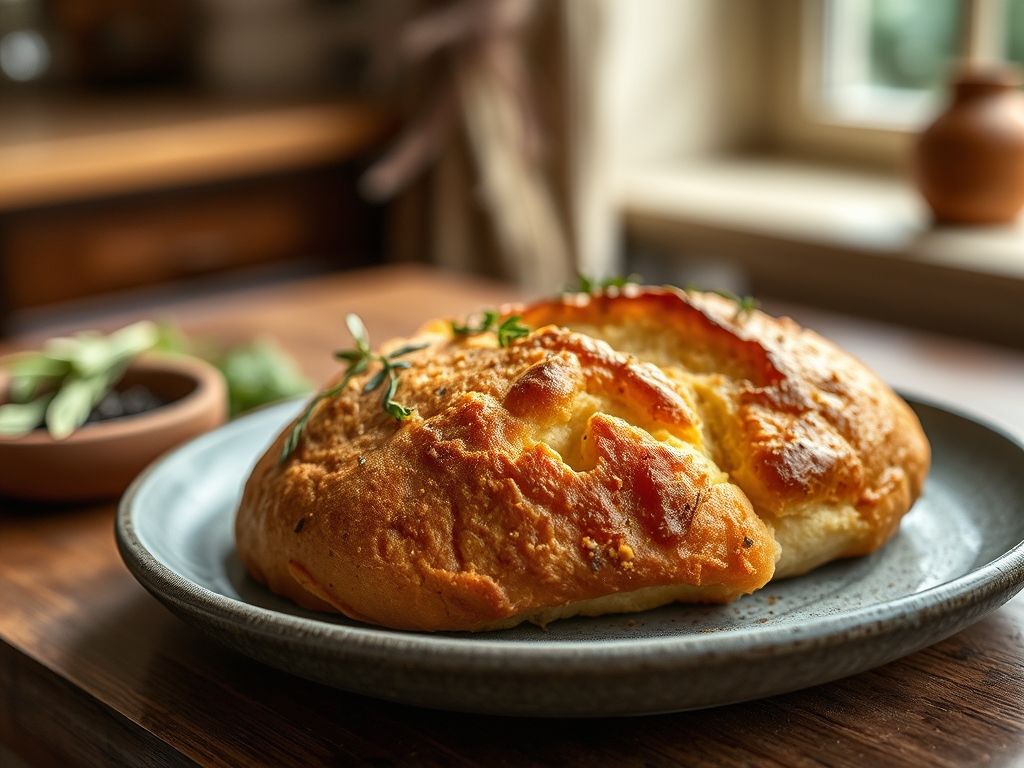
Listen to the sound of a shattering glass ceiling. That is the crust of a perfect No Knead Pot Bread as it yields to a serrated blade. Most amateur bakers treat gluten like a stubborn mule that requires physical punishment to cooperate. They sweat over floured counters; they bruise their palms; they pray to the gods of yeast for a crumb that isn't a dense brick. Forget the manual labor. We are pivoting to the infrastructure of patience. By leveraging the long phase surface set, we allow hydration to do the heavy lifting. This is a scientific coup where time replaces muscle. The result is a loaf with an interior so airy it feels like captured mist and a crust so thick it could defend a fortress. We are talking about a high-hydration masterpiece that relies on the thermal mass of a heavy pot to simulate a professional steam-injection oven. It is efficient, it is elegant, and it is the only way you should be making bread in the modern era.
THE DATA MATRIX
| Metric | Specification |
|---|---|
| Prep Time | 10 Minutes (Active) |
| Execution Time | 18 – 24 Hours (Passive) |
| Yield | 1 Large Boule (Approx. 800g) |
| Complexity (1-10) | 2 |
| Estimated Cost per Serving | $0.22 USD |
THE GATHERS
Ingredient Protocol:
- Bread Flour (High Protein): 430g / 3.25 cups
- Filtered Water (Room Temp): 345ml / 1.5 cups
- Sea Salt (Fine): 8g / 1.5 teaspoons
- Instant Yeast: 1g / 0.25 teaspoons
- Cornmeal or Bran (For dusting): 10g / 1 tablespoon
Section A: Ingredient Quality Audit:
The primary failure point in No Knead Pot Bread is protein content. If you use standard all-purpose flour with a low protein percentage, the dough will become too viscous and lose its structural integrity during the long ferment. Always check the label for at least 12.5 percent protein. If your yeast is questionable, do not risk an eighteen-hour wait. Perform a bloom test: dissolve a pinch in warm water with sugar. If it does not aerate and foam within five minutes, discard it. Finally, use filtered water. Chlorine in municipal tap water can inhibit yeast activity and lead to a stunted rise. If your dough feels like a puddle, your hydration-to-protein ratio is skewed; add ten grams of flour to stabilize the matrix.
THE MASTERCLASS
Step 1: The Molecular Integration
Combine your dry ingredients in a large glass bowl. Use a digital scale for precision; volume measurements are the enemy of consistency. Pour in the water and use a sturdy spatula to incorporate until no dry streaks remain. The dough will look shaggy and unattractive. Do not be tempted to touch it with your hands.
Pro Tip: This stage initiates autolyse. Even without kneading, the water begins to break down the flour proteins to form gluten bonds. Using a digital scale ensures your hydration stays exactly at 80 percent, which is the sweet spot for a honeycomb crumb.
Step 2: The Long Phase Fermentation
Cover the bowl tightly with plastic wrap to prevent a skin from forming. Leave it on the counter at room temperature (approx. 70 degrees Fahrenheit) for 12 to 18 hours. You are looking for the dough to double in size and for the surface to be dotted with bubbles.
Pro Tip: This is where we infuse the bread with flavor. The long, cool ferment allows the yeast to produce organic acids and esters that you simply cannot get in a quick-rise loaf. It is a biological transformation that mimics the complexity of sourdough.
Step 3: The Structural Fold
Flour your work surface generously. Use a bench scraper to gently turn the dough out. It will be sticky. Fold the edges toward the center to create a rough ball. Flip it over so the seam side is down. Let it rest for fifteen minutes while you prepare a cotton towel heavily dusted with flour or cornmeal.
Pro Tip: Using a bench scraper prevents you from adding too much extra flour. Excessive flour at this stage will create dry pockets and ruin the viscous elasticity required for a massive oven spring.
Step 4: The Final Proof and Thermal Loading
Place the dough seam-side down on the prepared towel. Cover it and let it rise for another two hours. Thirty minutes before the time is up, place a heavy 6-quart Dutch oven (cast iron is mandatory) into the oven and preheat to 450 degrees Fahrenheit.
Pro Tip: We are loading thermal mass. The pot acts as a heat sink. When the cold dough hits the hot iron, it creates an immediate burst of steam that keeps the exterior soft long enough for the bread to expand fully.
Step 5: The High-Heat Execution
Carefully remove the blazing hot pot. Slide your hand under the towel and flip the dough into the pot, seam-side up. This "messy" seam will naturally crack, creating a rustic look. Cover with the lid and bake for 30 minutes. Remove the lid and bake for another 15 to 20 minutes until the crust is dark mahogany.
Pro Tip: Removing the lid allows the Maillard reaction to accelerate. Without the lid, the trapped steam escapes, allowing the sugars in the crust to caramelize and render a deep, nutty flavor profile.
Section B: Prep & Timing Fault-Lines:
If your kitchen is cold (under 65 degrees), the 18-hour window may need to stretch to 24 hours. Conversely, in a humid, 80-degree kitchen, your dough might over-proof in 10 hours and turn into a fermented soup. Use your eyes, not just the clock. The dough is ready when it is jiggly and smells slightly boozy. If you miss the window and the dough collapses, you can still save it; fold in a bit more flour, shape it, and bake it as a flatbread.
THE VISUAL SPECTRUM
Section C: Thermal & Visual Troubleshooting:
Look at the reference photo above. Note the "ears" or the jagged ridges where the bread expanded. If your loaf is flat and smooth like a stone, you likely over-handled it during the folding phase, popping the internal gas bubbles. If the crust is pale and blonde, your oven temperature is inaccurate; use an oven thermometer to verify you are hitting a true 450 degrees. A dull, matte finish usually indicates a lack of steam. If your pot lid does not have a tight seal, place a small tray of water on the bottom rack of the oven to aerate the chamber with additional moisture. The crumb should be "open," meaning large, irregular holes are visible. Small, tight holes suggest under-hydration or old yeast.
THE DEEP DIVE
Macro Nutrition Profile:
A standard slice (approx. 50g) contains roughly 130 calories, 26g of carbohydrates, 4g of protein, and 0.5g of fat. Because of the long fermentation, the glycemic index is lower than store-bought white bread, and the phytic acid is reduced, making minerals easier to absorb.
Dietary Swaps:
- Vegan: Naturally vegan.
- Keto: This infrastructure does not support Keto. The gluten network requires starch.
- Gluten-Free: Replace flour with a high-quality 1:1 GF baking blend containing xanthan gum, but reduce water by 15 percent to prevent a gummy core.
Meal Prep & Reheating Science:
To maintain the molecular structure, never refrigerate bread; it accelerates staling via starch retrogradation. Store at room temperature in a paper bag. To revive a crust, spray the loaf lightly with water and place it in a 350-degree oven for six minutes. This re-gelatinizes the starches and restores the crunch.
THE KITCHEN TABLE
Why is my dough so sticky?
High hydration is the secret to the "holey" crumb. Use a bench scraper and floured hands. Do not add more flour to the dough itself, or you will end up with a dense, dry loaf.
Can I use a glass pot?
No. Glass cannot handle the thermal shock or provide the radiant heat necessary. Use enameled cast iron or raw cast iron for the best results and the most aggressive crust development.
My bread is stuck to the pot!
This happens if the pot wasn't preheated long enough. Ensure the pot is at 450 degrees for at least thirty minutes. A light dusting of cornmeal on the bottom of the dough also acts as a physical lubricant.
Does the yeast brand matter?
Instant yeast is preferred for this method. Active dry yeast works but should be dissolved in the water first to ensure even distribution. Avoid "Rapid Rise" yeast, as it burns out before the long ferment finishes.