Forget everything you think you know about the fragile, temperamental world of puff pastry or the chilled, butter-flecked anxiety of a standard shortcrust. We are entering the realm of structural engineering where fat and flour are forged in the fires of a boiling cauldron. The Hot Water Crust is the titanium exoskeleton of the culinary world. It is a dough that defies the laws of traditional pastry by demanding heat rather than fearing it. Imagine a golden, burnished fortress that is crisp enough to shatter under a tooth but structurally sound enough to hold a kilogram of succulent, jellied meat without a hint of a "soggy bottom." This is the architecture of the British pork pie and the raised game pie; it is a medium that allows you to sculpt edible monuments. When the boiling water hits the flour, it triggers an immediate starch gelatinization, creating a dough that is as pliable as warm clay and as strong as leather. It is visceral, it is fatty, and it is the ultimate test of your kitchen infrastructure.
THE DATA MATRIX
| Metric | Specification |
|---|---|
| Prep Time | 30 Minutes |
| Execution Time | 2 Hours 15 Minutes |
| Yield | 1 Large 8-inch Raised Pie |
| Complexity | 7 / 10 |
| Estimated Cost per Serving | $3.25 |
THE GATHERS
Ingredient Protocol:
- 500g / 4 cups All-Purpose Flour
- 100g / 0.8 cups Strong Bread Flour (for structural protein)
- 200g / 0.9 cups High-Quality Lard (rendered pig fat)
- 220ml / 0.9 cups Water
- 10g / 2 tsp Fine Sea Salt
- 1 Large Egg (for the gilded wash)
- 600g / 1.3 lbs Coarsely Minced Pork Shoulder
- 200g / 0.4 lbs Smoked Bacon (finely diced)
- 5g / 1 tsp Ground White Pepper and Mace
- 150ml / 0.6 cups Concentrated Bone Stock (for the jelly)
Section A: Ingredient Quality Audit:
The most common failure point in a Hot Water Crust is the fat selection. If you attempt to use "vegetable shortening" as a direct swap for lard, you will lose the characteristic savory depth and the specific viscous mouthfeel that defines this dish. If your lard has a "piggy" or rancid scent, it has oxidized; discard it immediately. To fix a dough that feels too brittle, ensure you are using a portion of bread flour. The higher protein content provides the tensile strength required to hold heavy fillings. If your flour is too low in protein, the walls of your pie will bulge and eventually breach during the bake.
THE MASTERCLASS
1. The Thermal Fusion
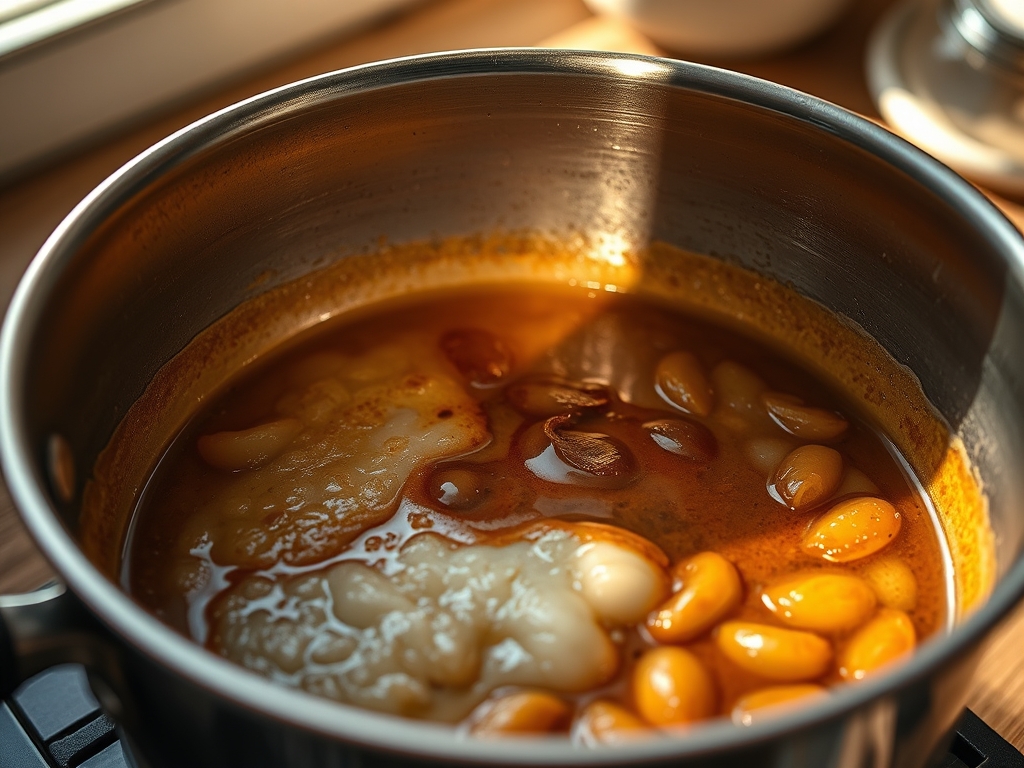
In a heavy-bottomed saucier, combine the water, salt, and lard. Heat until the mixture reaches a rolling boil. Do not let it simmer for long or you will lose water volume through evaporation, which throws off your hydration ratio. Immediately pour the boiling liquid into your flour blend.
Pro Tip: This step triggers starch gelatinization. By cooking the starch granules instantly, you create a dough that is moldable while warm. Use a digital scale to ensure your water weight is exact after the boil to maintain the correct hydration.
2. The Manual Integration
Use a wooden spoon to bring the dough together until it forms a shaggy mass. Once it is cool enough to handle but still significantly warm, turn it out onto a clean surface. Work the dough quickly with a bench scraper to ensure all flour pockets are hydrated.
Pro Tip: Speed is your ally here. As the dough cools, the fats begin to solidify and the dough loses its elasticity. You want to "raise" or mold your pie while the internal temperature of the dough is between 110F and 120F for maximum pliability.
3. The Structural Build
Take two-thirds of the dough and press it into the base and up the sides of a springform pan or a traditional wooden pie dolly. Ensure the walls are of uniform thickness to prevent "hot spots" or structural collapses. Pack your seasoned meat filling tightly to eliminate air pockets.
Pro Tip: Air pockets are the enemy of the Hot Water Crust. Use your knuckles to compress the meat. This ensures that when the fat begins to render during the bake, the meat shrinks uniformly, leaving a perfect cavity for the savory jelly.
4. The Sealing and Venting
Roll out the remaining dough to create a lid. Dampen the edges of the wall, place the lid on top, and crimp the edges aggressively to create a hermetic seal. Cut a small hole in the center of the lid to allow steam to escape.
Pro Tip: Use a digital thermometer to check the internal temperature of the meat. You are looking for 165F. The steam vent prevents the internal pressure from blowing out the sides of your beautifully sculpted crust.
Section B: Prep & Timing Fault-Lines:
The "Soggy Bottom" syndrome in a Hot Water Crust is rarely about the dough and usually about the cooling process. If you leave the pie in the tin for too long after it leaves the oven, steam will trap against the crust and turn your architectural masterpiece into a damp sponge. Remove the sides of the springform pan for the last 15 minutes of baking to allow the Maillard reaction to occur on the vertical walls. Furthermore, never pour your bone stock jelly into a hot pie. Both the pie and the liquid must be at room temperature to ensure the jelly sets correctly without soaking into the pastry.
THE VISUAL SPECTRUM
Section C: Thermal & Visual Troubleshooting:
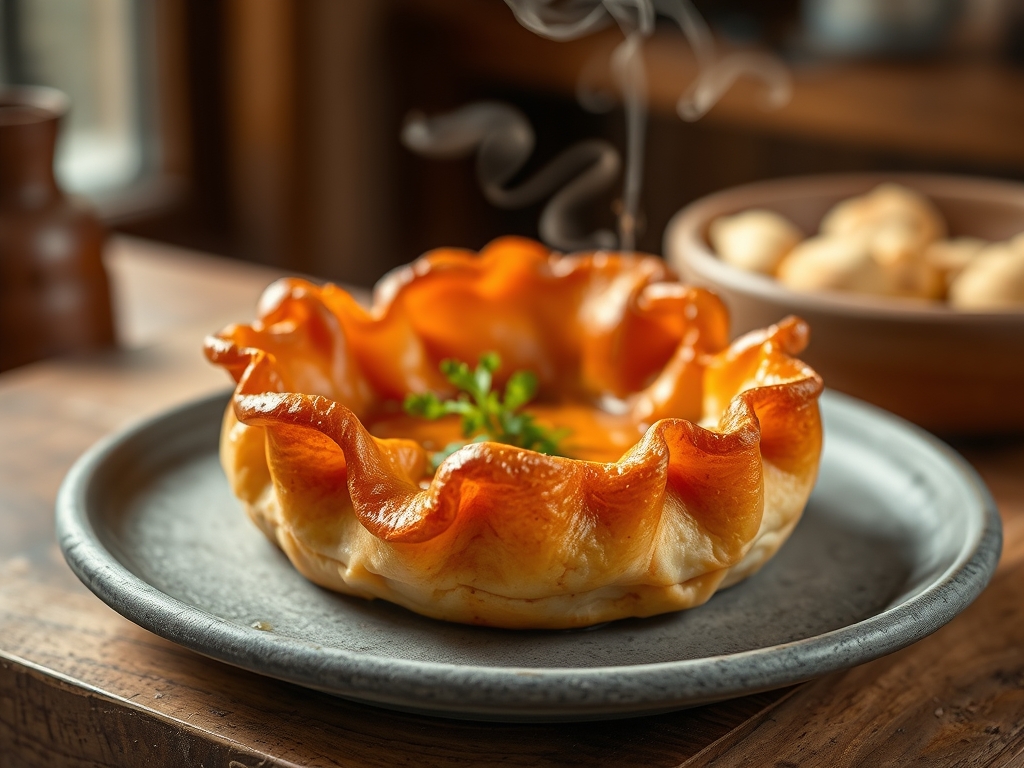
Referencing the Masterclass photo, your crust should exhibit a deep, mahogany sheen with a distinct "crimp" that remains sharp and defined. If your pie looks pale and "dusty," your oven temperature was likely too low or you skipped the egg wash. The egg wash provides the proteins and sugars necessary for intense browning. If you see "bleeding" where juices have escaped the lid, your crimping was not forceful enough. A perfect Hot Water Crust should have a slight "sheen" from the lard; it should look dense and formidable, not light and flaky like a croissant. If the sides are bulging, you likely didn't chill the meat filling sufficiently before assembly, causing it to expand too rapidly.
THE DEEP DIVE
- Macro Nutrition Profile: This is a high-density fuel source. Expect approximately 450-550 calories per slice, with a significant percentage derived from saturated fats and complex carbohydrates. It is designed for satiety and durability.
- Dietary Swaps: For a Vegan variant, use refined coconut oil to mimic the saturation of lard, though the flavor profile will shift. For Gluten-Free needs, a blend of rice flour and xanthan gum can work, but the "raising" technique becomes much more difficult due to the lack of elastic protein.
- Meal Prep & Reheating Science: The Hot Water Crust is one of the few pastries that is superior when served cold or at room temperature. To reheat without destroying the molecular structure, use a low-temperature oven (300F) to prevent the lard from weeping out of the crust and making the base greasy.
THE KITCHEN TABLE
Why is my dough cracking as I mold it?
The dough has likely dropped below the critical temperature threshold. If it cools too much, the fats solidify and the starch loses its flexibility. Keep the dough covered in a warm bowl while working to maintain its viscous quality.
Can I use butter instead of lard?
You can, but the water content in butter (about 15-18%) will change the hydration. You must reduce the added water slightly. Butter also has a lower melting point, making the "raised" walls more prone to Slumping during the initial bake.
What is the purpose of the jelly?
The jelly, made from infused bone stock, fills the gap created when the meat shrinks. It acts as a preservative by sealing the meat from air and adds a luxurious, melt-in-the-mouth texture that contrasts the crunch of the crust.
How do I get that high-gloss finish?
Double-glaze your pie. Apply the first egg wash before it goes into the oven and a second "booster" wash about 20 minutes before the end of the bake. This creates a thick, lacquered finish that is visually stunning.